
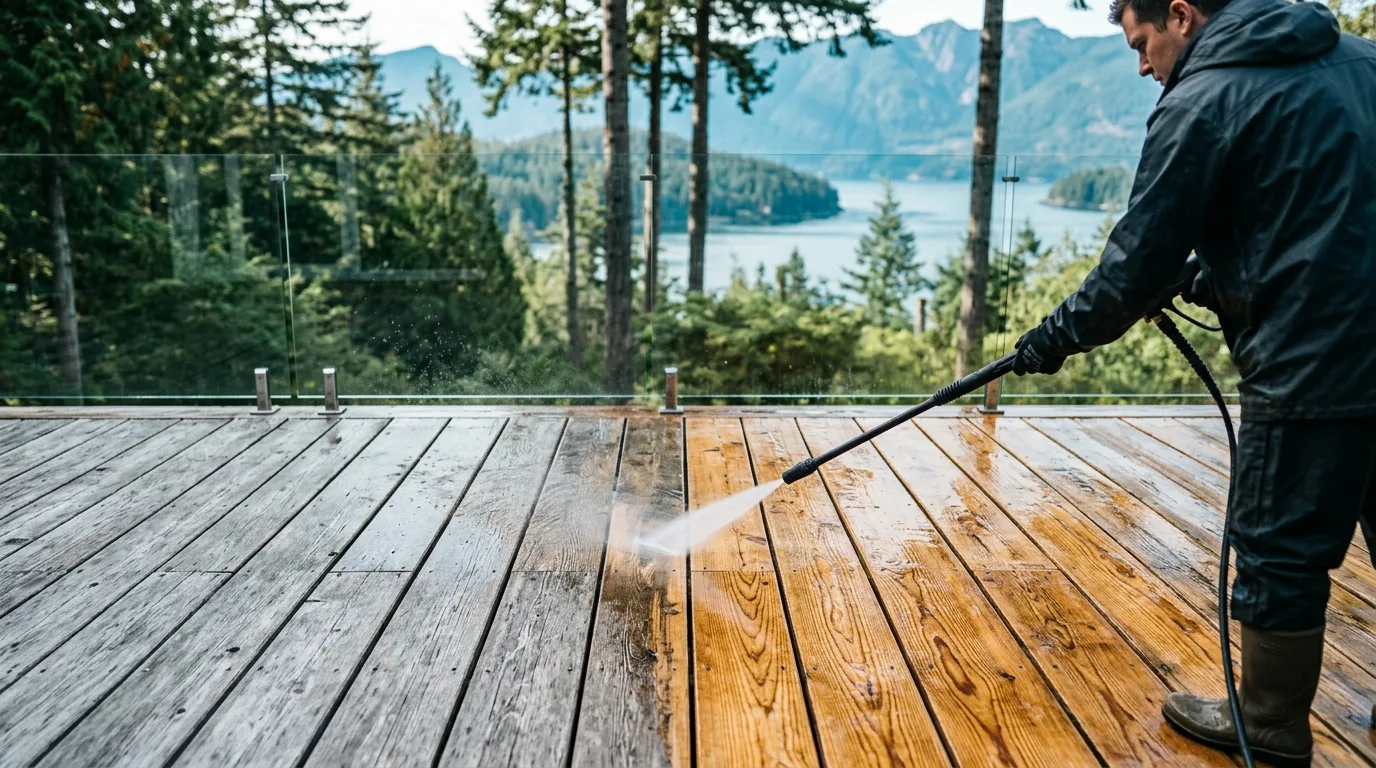
Deck Washing and Stain Prep
Grey, slick and tired is what a few Island winters do to a deck. We wash the boards back to bare timber colour and leave them ready to stain, or just ready to sit on.
A deck is the surface you touch most and maintain least. It gets sat on, walked on barefoot, dragged across with furniture, rained on all winter and baked all summer, and unlike a fence, nobody notices its condition until it is already grey.
What the Island climate does to decking
UV greying. Sunlight breaks down lignin, the compound that binds wood fibres and gives timber its colour. The surface layer goes silver-grey and slightly rough. It is only about the top fraction of a millimetre — underneath, the board is usually still perfectly good — which is why a wash makes such a dramatic difference.
The slippery film. Between the boards, along the shaded edges and anywhere under a tree, a biological film builds up over winter. On a horizontal surface you walk on that is a real problem, especially on stairs and especially in bare feet. Decks that are shaded most of the day can go slick within a single wet season.
The gaps. The spaces between deck boards exist so water can drain. Fill them with fir needles, leaf mulch and dirt and they stop draining, so water sits on top of the joists beneath. Wet timber against wet timber, all winter, is how joists rot from the top down. Clearing the gaps is genuinely structural maintenance, not tidiness.
Failing finish. Old stain or sealer does not wear away evenly. It goes patchy, flakes at the high-traffic paths and lifts at the board ends, so the deck ends up looking blotchy even where the timber underneath is fine.
How we wash a deck
Lower pressure than you think. Cedar, fir and pressure-treated softwood are soft, and pushing too hard erodes the soft spring growth between the harder grain lines, leaving the board rippled and furry. Furring is not just cosmetic: a fuzzed board drinks stain unevenly and feels rough underfoot forever.
We work along the grain, board by board, at a stand-off suited to the timber and its condition, with a cleaning solution doing the work on the biological growth. Rails, balusters, posts, fascia boards, stair treads and stringers are all included, and the gaps between boards get cleared out.
Composite decking is different again. It is not wood, so greying is not the issue — but composite boards absolutely grow algae and mildew in their texture grain, and many brands specifically limit the pressure you may use without voiding the warranty. Composite gets a low-pressure wash with the appropriate cleaner. It comes up very well.
Preparing for stain or sealer
If you are re-finishing, the wash is the most important step in the whole project. Stain applied over a mildew film or embedded dirt sits on top of the contamination instead of penetrating the timber, and it fails early — usually within a season.
Then you wait. This is the part people rush. Timber has to dry down to a suitable moisture content before it will accept a finish, and on this coast that takes several dry days, not several hours. Staining damp boards traps moisture underneath and the finish peels. We will tell you what we would wait for, and honestly, the weather decides the schedule more than either of us does.
Old failing finish is its own conversation. Washing removes dirt and growth and will lift loose, flaking finish, but it is not a stripping service. A deck with a heavy old coating that needs to come off entirely is a different scope of work, and we will tell you which situation you are in at the quote.
What we look for
While we are down at board level we see things you do not from a patio chair: soft spots, split boards, popped or rusted fasteners, loose railings, and rot starting at the board ends where water sits. None of that is our repair work, but you will hear about all of it.
Timing
Late spring through summer, which is both when you want to be using the deck and when there is a realistic chance of the dry stretch a stain job needs. Booking early in the season leaves room for the weather to cooperate.
We wash decks across Nanaimo, Lantzville, Nanoose Bay, Cedar, Parksville, Qualicum Beach, Ladysmith, Chemainus, Errington and Coombs, Monday to Friday, 9:00 AM to 5:00 PM. Quotes are free.
We wash decks at the pressure the boards will actually take, working along the grain so the timber comes up clean and smooth rather than furred, which is the whole difference between a deck you can stain and one you have to sand.
What You Get From Deck Washing
Grey UV weathering lifted to bring back the timber's real colour
Slippery biological film removed from boards and stair treads
Gaps between boards cleared so water drains off the joists again
Worked along the grain at low pressure — no furring, no rippled boards
Rails, balusters, posts, stringers and stair treads all included
Composite decking cleaned within manufacturer pressure limits
Boards left properly prepared for stain or sealer to penetrate
Soft spots, split boards and popped fasteners flagged for you
Low pressure worked with the grain, so no permanent wand marks
Solution and dwell time instead of force on soft, weathered wood
Railings, spindles and stair treads done by hand
Left to dry through before any coating is considered
What Deck Washing Covers
Wood is the least forgiving surface on a property to clean, because the same pressure that lifts grey off the boards also raises the grain and leaves permanent wand marks. A deck is washed at low pressure with a cleaning solution doing the work, worked along the grain rather than across it. Composite boards have their own rule: they take far less pressure than people expect, and the mould in the texture needs a solution rather than force.
How Deck Washing Works
Inspect the boards
We check the timber species or composite type, the condition of any existing finish, and note soft spots, loose fasteners and rot at the board ends.
Clear the deck
Furniture, planters, mats and the barbecue come off, and the debris packed into the gaps between boards is cleared out.
Apply the cleaner
A wood-appropriate cleaning solution goes on and is given time to break down the mildew and the grey weathered layer.
Wash along the grain
Board by board, at a pressure the timber will take, working with the grain so the surface comes up smooth rather than furred. Rails and stairs included.
Rinse and advise
Everything is rinsed down, the surroundings cleaned up, and we talk you through the drying time you will need before staining.
The Method, in Short
Identify the material and its condition
Cedar, pressure-treated fir, hardwood and composite all behave differently, and a weathered board behaves differently again from a sound one. Soft or splitting boards are pointed out before work begins.
Clear and protect
Furniture and planters come off, gaps between boards are cleared of packed debris, and anything below a raised deck is covered or moved.
Wash with the grain at low pressure
The solution goes on and dwells, then the rinse is worked along the length of each board at a consistent stand-off. Across the grain or too close is what leaves stripes that never come out.
Rinse and let it dry properly
A full rinse including the gaps and the framing below, then the deck is left to dry through before anything is applied to it. Sealing damp wood traps the moisture.
What It Costs
Priced by deck area, with railings and spindles counted separately because they are hand work. Stairs add time. Quotes are free.
Deck Washing by town
Tree cover, exposure and housing age change what this job actually takes. These cover it town by town.
Book Your Deck Washing
Tell us about the job and we'll send you a free, no-obligation quote for deck washing.
Deck Washing Questions
It will lift loose and flaking finish, and it will not take off a sound, well-bonded coating. Deck washing is a cleaning service rather than a stripping one, so if you have a heavy old finish that needs to come off completely, tell us at the quote — that is a different scope.
Several dry days, not hours. The timber has to dry down through its depth before it will take a finish properly, and staining damp boards traps moisture and causes peeling. On Vancouver Island this means planning around a settled dry stretch, which is why late spring and summer are the sensible seasons.
Yes. Composite does not grey the way timber does, but algae and mildew get into the texture grain and it goes slick and blotchy. Most manufacturers set a pressure limit for warranty purposes, so composite gets a low-pressure wash with the right cleaner.
That is furring, caused by too much pressure eroding the soft growth rings between the harder grain lines. Once it happens the only fix is sanding, and the board takes stain unevenly until you do. Working along the grain at a controlled pressure is how it is avoided.
It very easily can, and this is the surface where the mistake shows up most obviously. Too much pressure tears the soft early wood out from between the harder grain, leaving a furry, raised texture that then holds dirt and water better than it did before. It also leaves visible wand tracks. Both are permanent — the only fix is sanding, and on a deck that is a large job.
Mostly, yes. Grey is ultraviolet-damaged surface fibre, and a proper wood cleaner lifts it and reveals the sounder wood underneath. What cleaning cannot fix is deeper damage — checking, splitting, or boards that have gone soft. Expect a marked improvement in colour, and expect a well-weathered deck to look its age rather than look new.
Not the same day, and usually not the next. Wood needs to dry through rather than just feel dry on the surface, and sealing over trapped moisture is how finishes end up cloudy, blotchy or peeling within a season. A few dry days is the usual guidance, longer if the weather is damp or the deck is shaded. It is worth the wait.
You Might Also Need
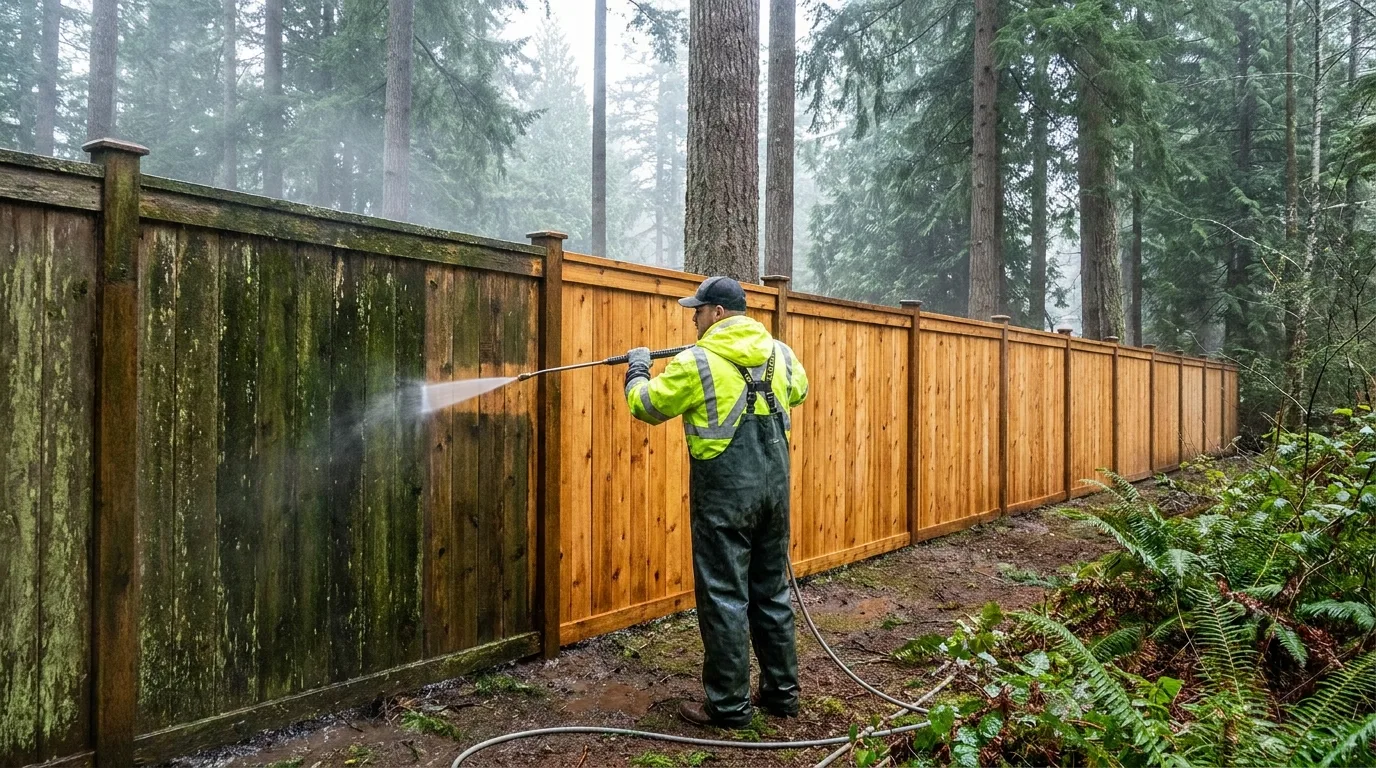
Fence Washing
Full-length washing of timber, vinyl and composite fencing, clearing the heavy green algae growth off the shaded face and bringing the entire run back to one consistent colour.
Learn more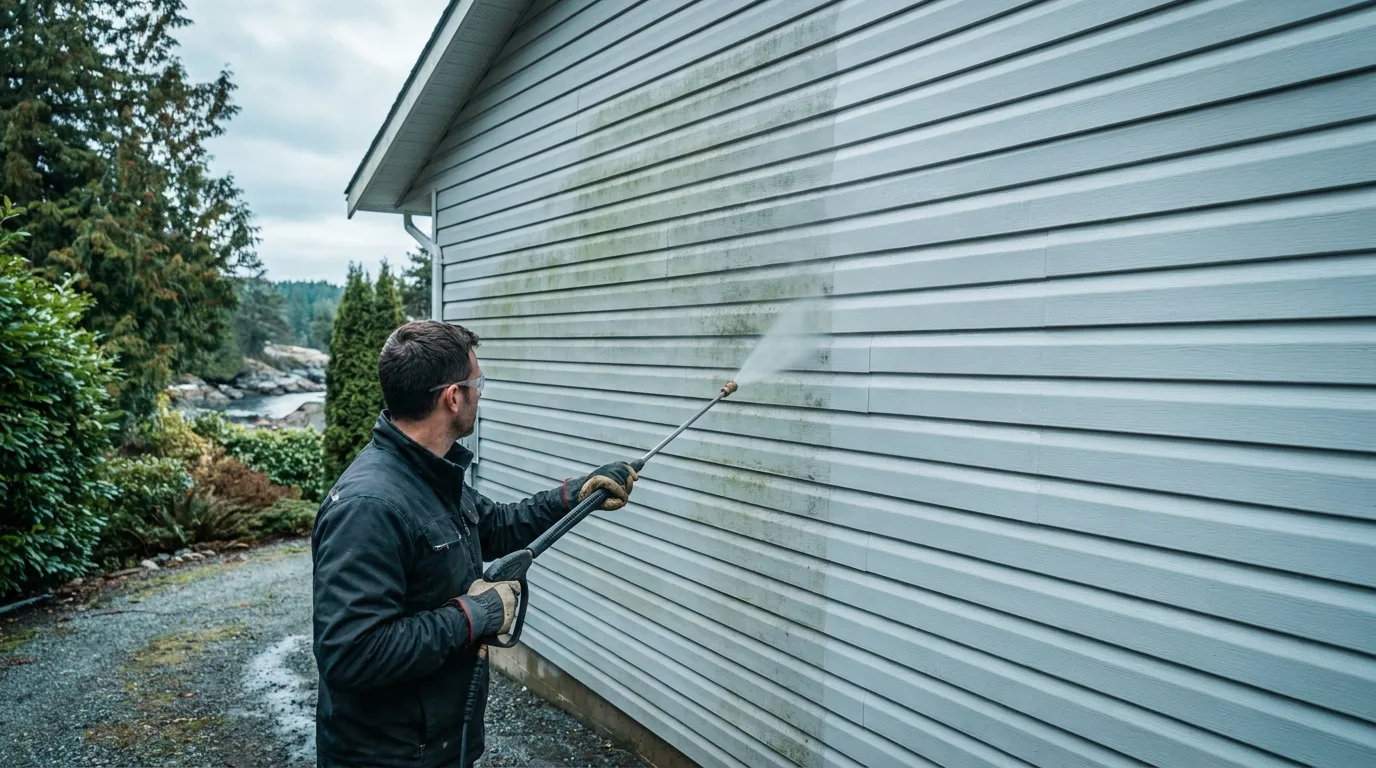
House Washing
A full soft wash of your home's exterior walls, soffits, fascia and trim, lifting algae, mildew, cobwebs and road film without forcing water behind the cladding.
Learn more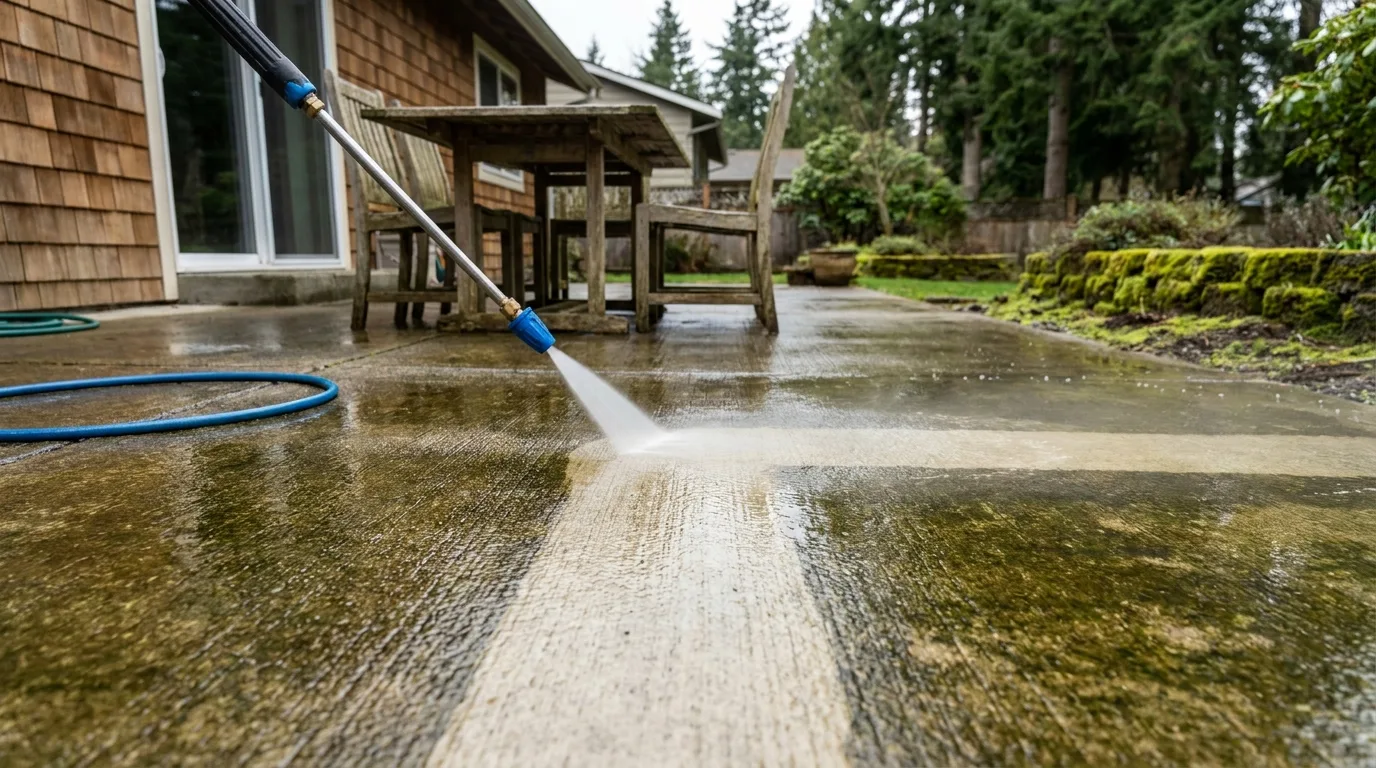
Concrete Cleaning
Cleaning for concrete anywhere on your property — patios, pool surrounds, garage floors, stairs, retaining walls, exposed aggregate and stamped finishes.
Learn moreGet Deck Washing Scheduled
Tell us whereabouts you are on the mid-Island and what needs doing.