
Fence Washing in Nanaimo
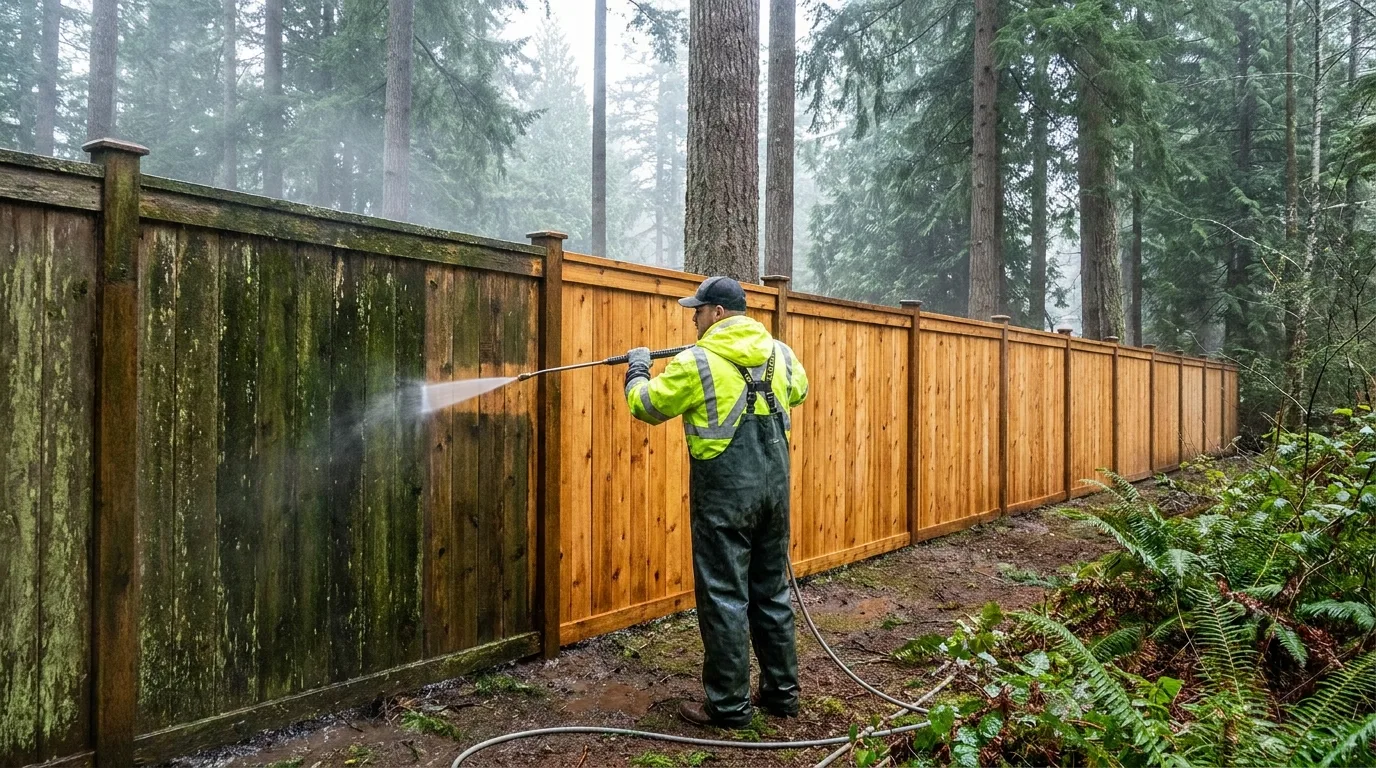
One side of your fence is green and the other is grey, and the whole run reads as neglected because of it. We wash the full length evenly, both faces, gates and posts included.
Your fence has two completely different problems on its two sides. Stand in the yard and look at it, then walk around the other side. The sun-facing face is usually grey and dry, weathered pale by UV. The shaded face — the one against the hedge, the north side, the one your neighbour looks at — is often deep green, damp to the touch and furred with algae growth that has been building since the last dry summer.
That is what a vertical surface does on this coast. It never gets walked on, so nothing wears the growth back, and whichever face sits in shade stays wet through six months of rain.
Why fences go worse than other timber
No finish on most of them. Very few fences around here are sealed or stained. Bare cedar and pressure-treated pine go straight from mill-fresh to weathered with nothing protecting them, and unsealed timber is porous enough to hold moisture and to give algae somewhere to anchor.
They are tall and thin. A fence has a huge surface area for its footprint, most of it well above eye level and most of it never touched. Growth accumulates on the upper rails, the cap boards and the tops of the pickets where nobody ever looks closely.
They sit in the wet zone. The bottom 30 centimetres is splashed by every rainfall, catches mud off the beds, and stays permanently damp. That is where the black staining, the moss at the base and the early rot all show up first.
Structures collect it. Lattice panels, decorative tops, post caps, gate hardware, and any spot where a plant grows against the fence: every one of those is a place growth gets a foothold and a hose never reaches.
Doing the whole run
This is the part that matters. A fence is read as one object from a distance. Clean twenty feet of it and leave the rest and you have not improved anything, you have just drawn a line. So we work the full length, both faces where we have access, top rail to ground, and both sides of every gate.
We work at a pressure suited to the timber, moving evenly panel by panel with consistent overlap so there are no bright patches, no missed pickets and no visible start-stop line where one session ended. On cedar and softwood that means enough restraint to lift the growth without eroding the soft grain. Vinyl and composite fencing get a gentler treatment again, mostly cleaning solution and a light rinse, and they come up looking close to new.
Posts, rails, caps, lattice, gate frames and hardware surrounds are all included. Where plants are growing up against the fence we work around them and rinse them off afterwards rather than cutting anything back.
The neighbour conversation
Fences are shared, so this comes up on nearly every job. A fence on a property line usually has a face pointing into someone else's yard, and we cannot go on their land without permission.
The practical version: give your neighbour a heads-up before the day, and most of the time they are happy to have it done — it is free improvement to something they look at every day, and their side is often the greener one. Occasionally neighbours split the cost and we do both properties in one visit, which is cheaper for everyone since we are already set up.
If access is refused or nobody is home, we clean everything reachable from your side and tell you exactly what we could not get to.
What comes off and what does not
Green algae, mildew, black staining, moss at the base, cobwebs and surface dirt all come off. Grey UV weathering lifts substantially on unsealed timber. What does not come off: knots, previous repairs, boards that are already rotting, and any mismatched replacement panels — a clean will make those more obvious, not less, because everything around them just got better.
When to book it
Spring and early summer are the natural window. The shaded face is at its greenest coming out of a wet winter, and washing it once the weather has settled means the timber gets a genuine chance to dry afterwards rather than going straight back into rain. If you are planning to stain or seal a fence, the wash comes first for the same reason it does on a deck: finish applied over a mildew film does not last.
Doing the fence with the deck is the common pairing. Both are outdoor timber in the same back yard, and combining them into one visit saves a second setup and a second trip.
We wash fences across Nanaimo, Lantzville, Nanoose Bay, Cedar, Parksville, Qualicum Beach, Ladysmith, Chemainus, Errington and Coombs, Monday to Friday, 9:00 AM to 5:00 PM. Quotes are free.
We wash the complete run rather than the visible stretch, because a fence cleaned in patches looks worse than one left alone — uniformity along the whole length is the point of the job.
What You Get From Fence Washing
Heavy green algae cleared off the permanently shaded face
The entire run washed evenly — no patches, no start-stop lines
Both faces cleaned wherever access allows
Posts, rails, cap boards, lattice and gates all included
The damp bottom section and its black staining dealt with
Correct pressure for cedar, pressure-treated pine, vinyl or composite
Plants growing against the fence worked around and rinsed after
Clear advice on neighbour access before the day, not on the day
Low pressure on soft weathered cedar, worked along the boards
The shaded face given the longer dwell it actually needs
Posts, rails and caps cleaned, not just the board faces
Failing boards and rotten post bases flagged before water goes on
What Fence Washing Covers
A fence is the longest run of timber on most properties and the one that gets the least attention until it is visibly black. It also has two faces in two different climates — one side gets sun and dries, the other sits in shade against a hedge or a building and stays damp. Cedar fencing weathers soft, so the cleaning is low pressure with a solution doing the work, exactly as it would be on a deck.
How Fence Washing Works
Measure the run
We walk the full length, check the fencing material and condition, identify which faces we can reach and flag any panels that are damaged or rotting.
Sort out access
We agree what is reachable from your side, and what would need a word with the neighbour, so there are no surprises when we arrive.
Apply the cleaner
Cleaning solution goes onto the growth, concentrating on the shaded face and the damp lower section, and is left to break down the algae.
Wash panel by panel
Even overlapping passes at a timber-appropriate pressure, working top rail to ground along the whole run, gates and posts included.
Rinse and finish
Plants and adjacent surfaces get rinsed, debris is cleared from the fence line, and we walk the full length with you to check the consistency.
The Method, in Short
Walk the line and note the condition
Loose boards, rotten post bases and leaning sections are found before the water goes on, because pressure will finish off anything already failing.
Protect what grows against it
Beds, climbers and hedging along the fence line are wetted down first, and anything trained onto the fence itself gets worked around rather than through.
Treat, then rinse with the grain
The solution is applied and given time, then rinsed board-along at low pressure. The shaded face nearly always needs longer dwell than the sunny one.
Do the posts, rails and caps
Post tops, cap rails and the horizontal rails hold the most growth because they stay wet longest, and they are the parts a quick pass along the boards misses.
What It Costs
Priced by the length of fence and whether one face or both are being done. Heavy growth on a shaded run takes longer. Quotes are free.
Book Your Fence Washing
Tell us about the job and we'll send you a free, no-obligation quote for fence washing.
Fence Washing Questions
Sunlight. The face that gets direct sun dries out after rain and weathers pale, while the shaded face stays damp long enough for algae to establish and thrive. On this coast the shaded side of a fence can be wet for most of the winter, which is exactly the condition algae wants.
Only with their permission, since it means being on their property. It is worth asking — most neighbours are glad to have it done, and sometimes they will split the cost so we clean both properties in one visit. If access is not possible we do everything reachable from your side and tell you what we could not get to.
Not at the right pressure. Cedar is soft, so too much force erodes the grain and leaves the boards rough — we work with restraint and rely on the cleaning solution instead. If any boards are already rotting or split we will point them out, since cleaning will make them more visible rather than less.
You can do a section, but be aware of how it looks. A fence reads as one continuous object, and a cleaned stretch beside a dirty one draws attention to the line between them. Most people who start with a section end up doing the rest, which is why we usually quote the full run.
Sun and airflow, almost always. The face that gets afternoon sun dries out after every rain and grows very little. The face that sits in shade — against a hedge, a wall, or simply pointing north — stays damp for days and grows steadily. It is the same timber in two different microclimates, and the shaded side needs both more dwell time and more frequent attention.
A sound, well-adhered stain survives a proper low-pressure wash. A stain that is already failing — chalking, flaking, or lifting at the edges — will come off in patches, and it is better to know that now than to discover it halfway along. If the fence is due to be recoated anyway, cleaning is the correct first step regardless.
The side facing your property, certainly. Doing the far side means being on their ground, so that is a conversation for the two of you before the work is booked rather than something to sort out on the day. Plenty of fences get done from both sides by agreement, and it is worth asking, since the shaded face is usually theirs.
You Might Also Need
Deck Washing
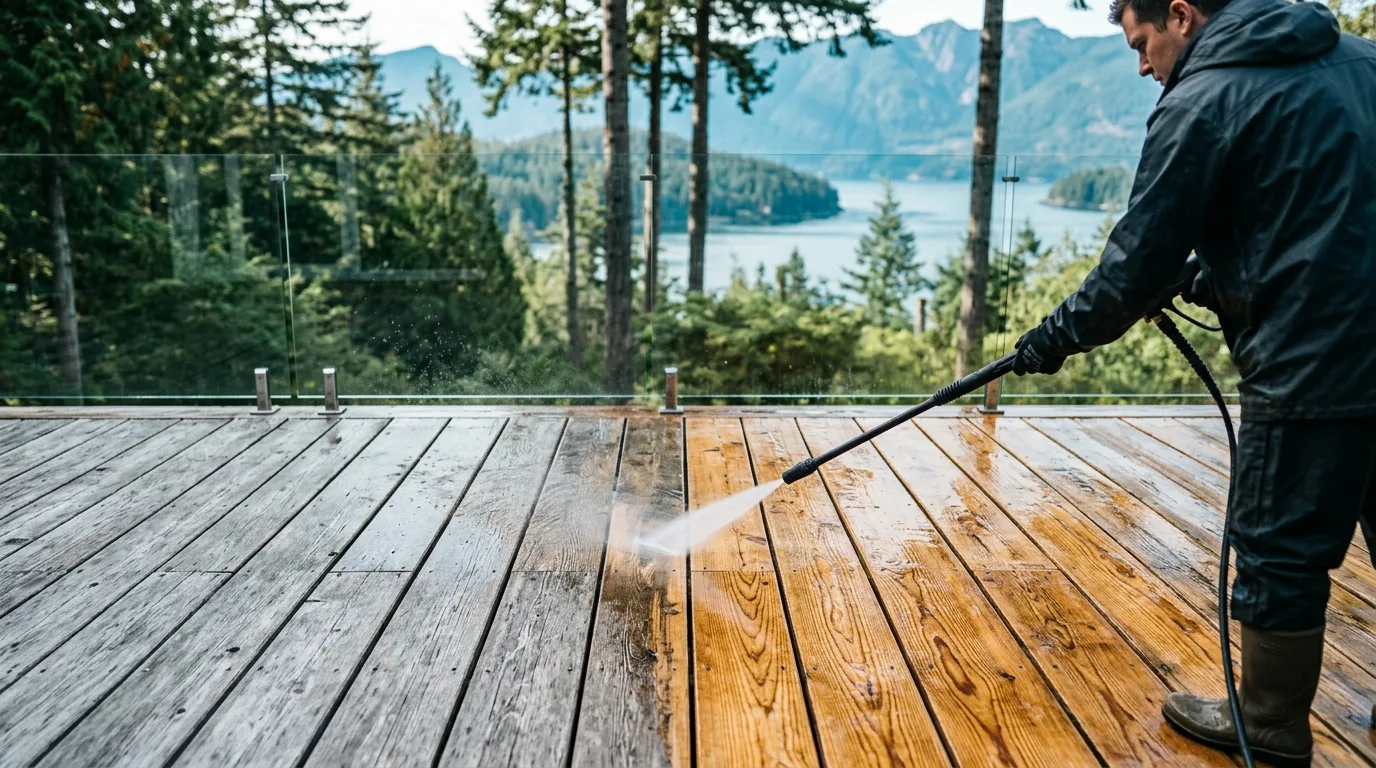
Careful washing of timber and composite decks, lifting grey UV weathering and the slippery film that builds up between boards, with the surface left ready for re-staining.
Learn more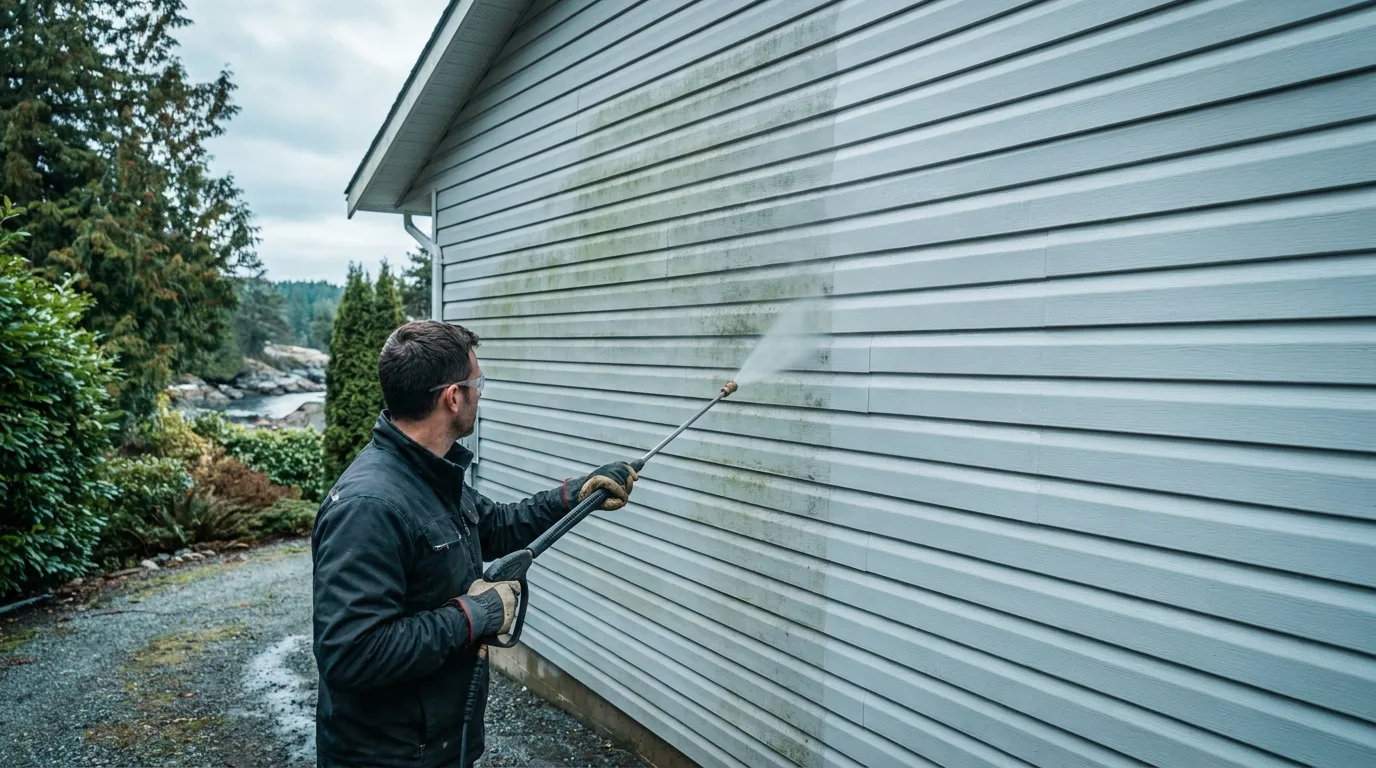
House Washing
A full soft wash of your home's exterior walls, soffits, fascia and trim, lifting algae, mildew, cobwebs and road film without forcing water behind the cladding.
Learn more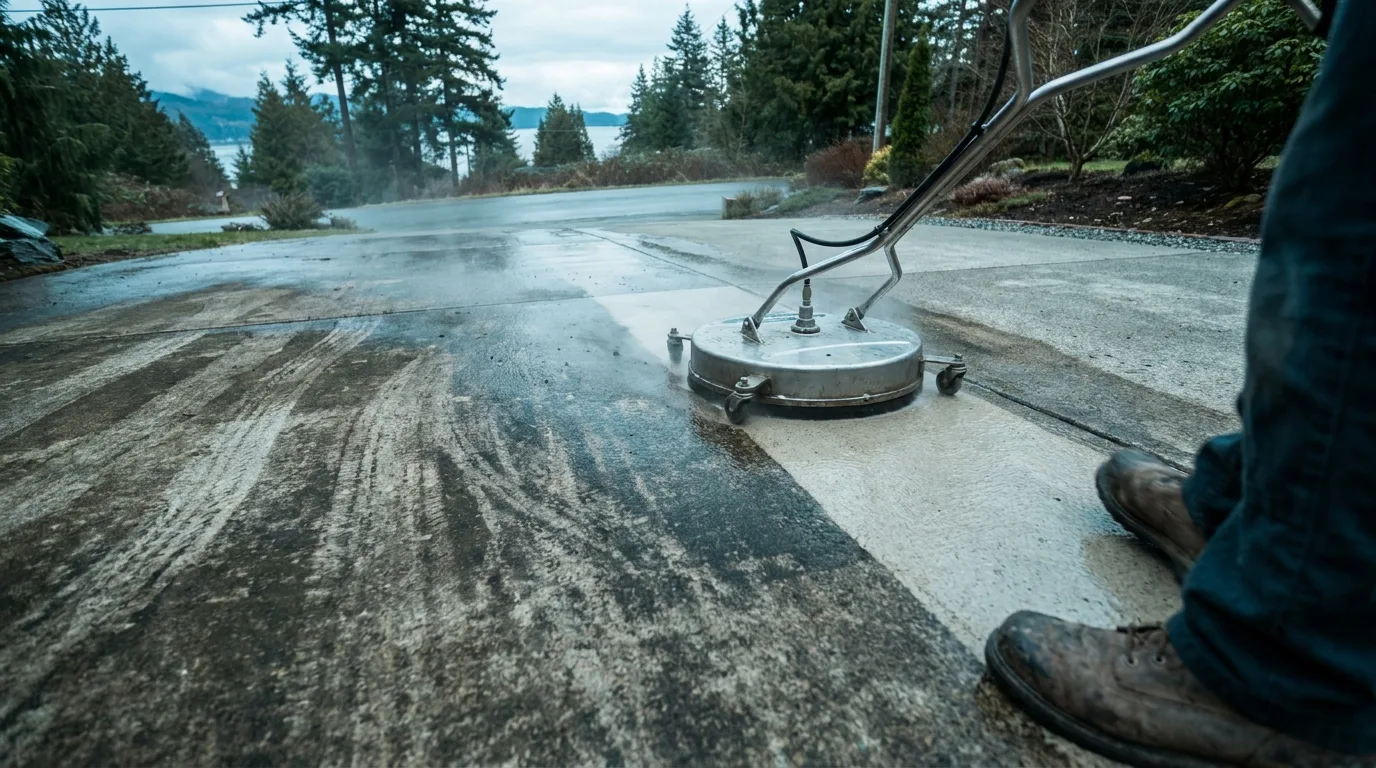
Driveway Cleaning
Deep cleaning of driveways and parking aprons, targeting vehicle staining — oil and fluid drips, tire scuffs, rust marks and the algae strip down the centre.
Learn moreTalk to Someone Local
A straight conversation about what the job needs, and the quote is free either way.