
House Washing Across Nanaimo
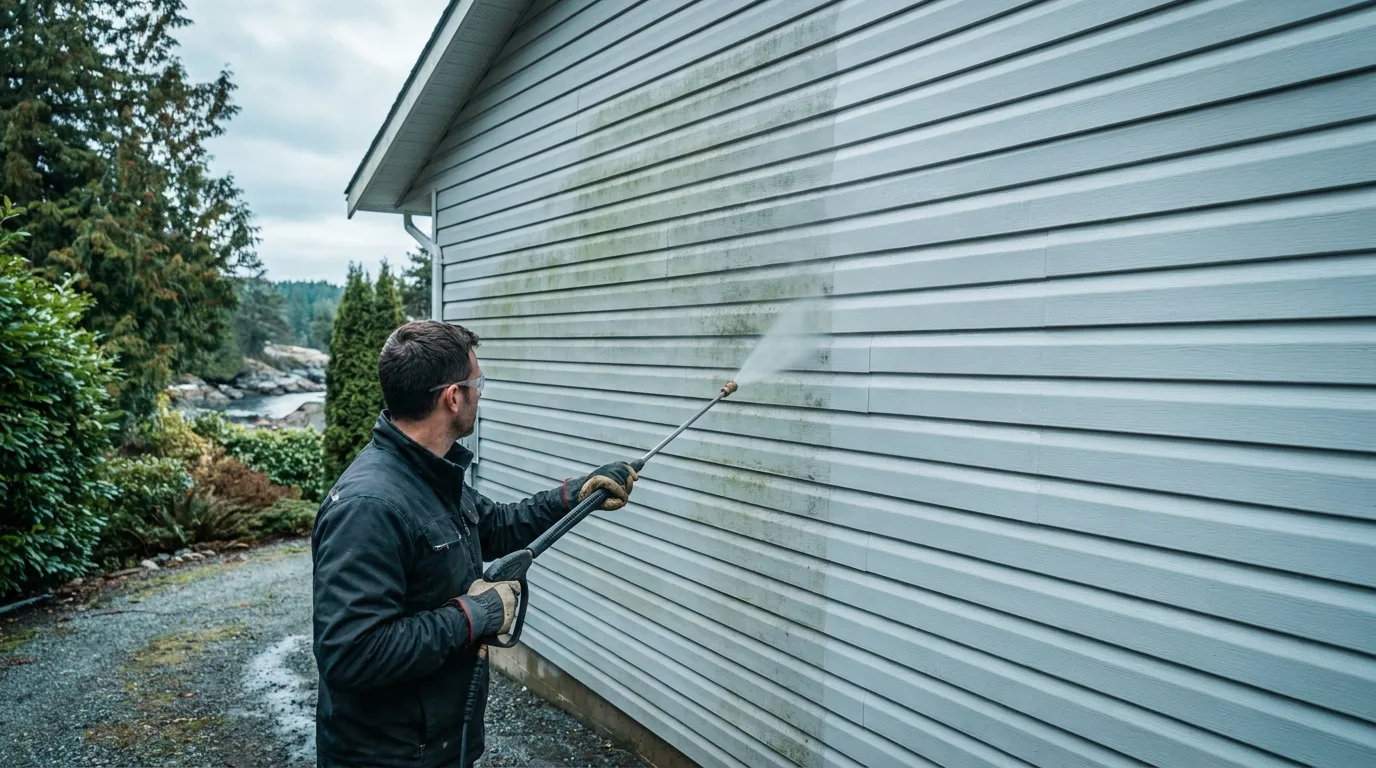
That grey-green film creeping up your siding is algae, and it does not rinse off with a garden hose. We soft-wash the whole exterior so your walls come back to their actual colour.
Look at the north wall of your house. On Vancouver Island it is almost always a different colour from the south wall. That grey-green tint is a living film — algae and mildew that thrive on a surface which stays damp and shaded from October through April. Add the fine dust and road film that settles on every exterior wall, plus the cobwebs and wasp nests that collect under the eaves, and the house ends up looking a decade older than it is.
A house wash is not a pressure wash. This is the part most people get wrong. Siding is not a solid surface — vinyl and lap boards are made of overlapping panels with gaps designed to let the wall breathe and drain. Aim a high-pressure wand at those gaps and you push water up behind the cladding, where it sits in the wall cavity with nowhere to go. Stucco can be chipped outright. Hardie board can have its factory finish stripped. Old paint comes off in sheets.
So we do the opposite. We apply a cleaning solution at low pressure, let it dwell long enough to break down the organic growth, and then rinse it away with a gentle flow directed downward, following the lap of the siding rather than fighting it. The chemistry removes the algae. The water only carries it off. The wall gets clean without ever being blasted.
What a house wash covers
The full exterior envelope: siding or stucco on all elevations, soffits and fascia, gutters cleaned on the outside face, exterior trim, window frames and sills, entry doors and door surrounds, porch ceilings and posts, and the foundation skirt where splash-back leaves a dirty band. Cobwebs, dirt-dauber and wasp nests under the eaves come down as part of the job.
We work all four sides, not just the ones you see from the road. The shaded wall against the fence line is usually the worst one, and it is the one a rushed operator skips.
Every cladding type behaves differently
Vinyl siding cleans up beautifully but chalks with age, and it will hold water behind the panels if approached wrongly. Hardie board and fibre cement are tough but their painted finish is not — pressure that a driveway shrugs off will dull it permanently. Stucco is porous and hairline-cracked by nature, so it wants a soft approach and a thorough rinse. Cedar shingle and board-and-batten need the gentlest treatment of all; the goal is to lift the growth without raising the grain. Painted wood siding depends entirely on the age and condition of the paint, which we check before we start rather than after.
We identify what we are working with during the quote, and that decides the solution strength, the dwell time and the rinse pressure.
Your plants and your neighbours
Landscaping gets pre-wetted before we apply anything and rinsed again afterwards, which is the practical way to protect beds against a cleaning solution. Delicate plantings close to the wall can be covered. We check that windows are closed, note any that do not seal well, and keep the flow off vents, light fixtures, exterior outlets and any exposed wiring.
Water and power come from your property. We need one working outdoor tap and an accessible outlet. If either is a problem, tell us at the quote stage and we will plan around it.
Why homeowners here book it
Some people book a house wash because they are listing the property and the difference between a green house and a clean one shows up in the first photo. Some do it before painting, because paint applied over a mildew film fails early. Plenty just got tired of looking at it.
And some of it is genuine maintenance. Organic growth holds moisture against the exterior. On timber and on painted surfaces, moisture that never dries is what leads to rot, blistering and finish failure. Getting the growth off once a year or so is a cheap way to protect a much more expensive surface.
Booking it with the rest
Most people who book a house wash have us do the gutters at the same time — the ladders are up and the exterior faces of the gutters are already being cleaned as part of the wash. Windows are the other natural pairing, and the sequence matters: the house gets washed first, then the glass, so the windows are not re-splashed afterwards. If your roof needs attention as well, that comes before everything, for the same reason.
We work Monday to Friday, 9:00 AM to 5:00 PM, across Nanaimo, Lantzville, Nanoose Bay, Cedar, Parksville, Qualicum Beach, Ladysmith, Chemainus, Errington and Coombs. Quotes are free.
We wash from the top down at low pressure with the cleaning solution doing the work, so nothing gets driven up under lap siding or into the soffit vents — the two places a careless house wash causes real damage.
What You Get From House Washing
Low-pressure soft wash that never forces water behind your siding
Algae, mildew and the grey-green shaded-wall film removed
Cobwebs, wasp and dirt-dauber nests cleared from under the eaves
Soffits, fascia, trim, sills and door surrounds included
All four elevations washed, including the shaded side nobody sees
Method matched to your cladding — vinyl, stucco, Hardie, cedar or painted wood
Landscaping pre-wetted, shielded where needed and rinsed afterwards
Ideal prep before painting, or before listing the house for sale
Low pressure, so nothing is forced behind the cladding
Solution and dwell time do the work, not force
Plantings watered before and rinsed after
The shaded walls checked deliberately, not just the street front
What House Washing Covers
House washing on this coast is a soft wash, not a pressure wash. Siding carries algae, mildew and the grey-green film that grows anywhere damp and shaded, and none of that is removed by force — it is removed by a cleaning solution given time to work, then rinsed off at a pressure closer to a garden hose. Pressure on siding is how water gets driven up behind lap joints and into wall cavities where nobody can see it drying, and how paint comes off in sheets. The method is chosen by what the wall is made of.
How House Washing Works
Walk the exterior
We identify the cladding type, check the condition of the paint or finish, and note windows, vents, fixtures and any spots that need shielding.
Protect the surroundings
Landscaping gets pre-wetted, delicate plantings covered, and furniture, cushions and barbecues moved clear of the walls.
Apply and dwell
The cleaning solution goes on at low pressure from the bottom up, then sits long enough to break down the algae and mildew instead of being scrubbed off.
Rinse top down
A gentle, controlled rinse works downward with the lap of the siding, carrying the growth off the wall without driving water into it.
Final pass and check
We re-rinse the landscaping, clear the eaves of any remaining webbing, walk the perimeter with you, and touch up anything that needs a second look.
The Method, in Short
Identify the cladding first
Vinyl, fibre cement, stucco, painted wood and cedar shingle each tolerate something different. Painted wood from before 1960 is assumed to have lead in the lower layers and is handled accordingly, with runoff controlled.
Protect what is below
Plants are soaked before anything is applied so they take up clean water first, and light fixtures, outlets, vents and open windows are covered or checked.
Apply and let it dwell
The solution goes on from the bottom up so it cannot run down dry siding and streak, then it is given the minutes it needs. This is the step that actually does the cleaning.
Rinse top down and check the shaded side
Rinsing runs top down at low pressure. The north and east walls are inspected last, because that is where anything left behind will show first.
What It Costs
Priced on the size of the house, the number of storeys and how much of it is in shade — the shaded elevations are the slow part. Quotes are free.
House Washing by town
Tree cover, exposure and housing age change what this job actually takes. These cover it town by town.
Book Your House Washing
Tell us about the job and we'll send you a free, no-obligation quote for house washing.
House Washing Questions
Not the way we do it. The pressure at the wall is deliberately low, and the cleaning solution does the removal. We check the condition of your paint or finish during the quote — if a surface is already failing, we will tell you before we start rather than discover it mid-job.
Pull patio furniture, cushions, planters and the barbecue a couple of metres away from the walls, and close all the windows on the elevations being washed. If you have anything precious planted tight against the house, point it out and we will cover it.
Eventually, yes. This is a wet coastal island and algae is airborne — nothing keeps a wall clean permanently. Most homes here look good for a year or more, and shaded, heavily treed lots tend to need it sooner than open sunny ones.
No, those are separate services. House washing covers the walls, soffits, fascia and trim. If your roof or your glass also needs doing, we can quote all of it together and sequence it properly in one visit.
No, and the difference matters more on siding than anywhere else on a property. Pressure washing uses force. House washing uses a cleaning solution at low pressure and lets chemistry do the work. Putting real pressure on siding drives water behind the boards, strips paint, and can force water into the wall itself — the damage is usually invisible for a season and expensive after that.
Not if the beds are pre-wetted and rinsed afterwards, which is standard on any wash. A plant that has already taken up clean water has far less capacity to take up anything else, and a thorough rinse at the end deals with the rest. Anything unusually sensitive is worth pointing out before the work starts rather than after.
That depends almost entirely on exposure rather than on the wash. A wall in full sun with air moving across it stays clean much longer than a north wall two metres from a hedge. Shade, overhanging trees and poor airflow are what bring growth back, so if one elevation greens up long before the others, the answer is usually to change what is around it rather than to wash more often.
You Might Also Need
Roof Cleaning
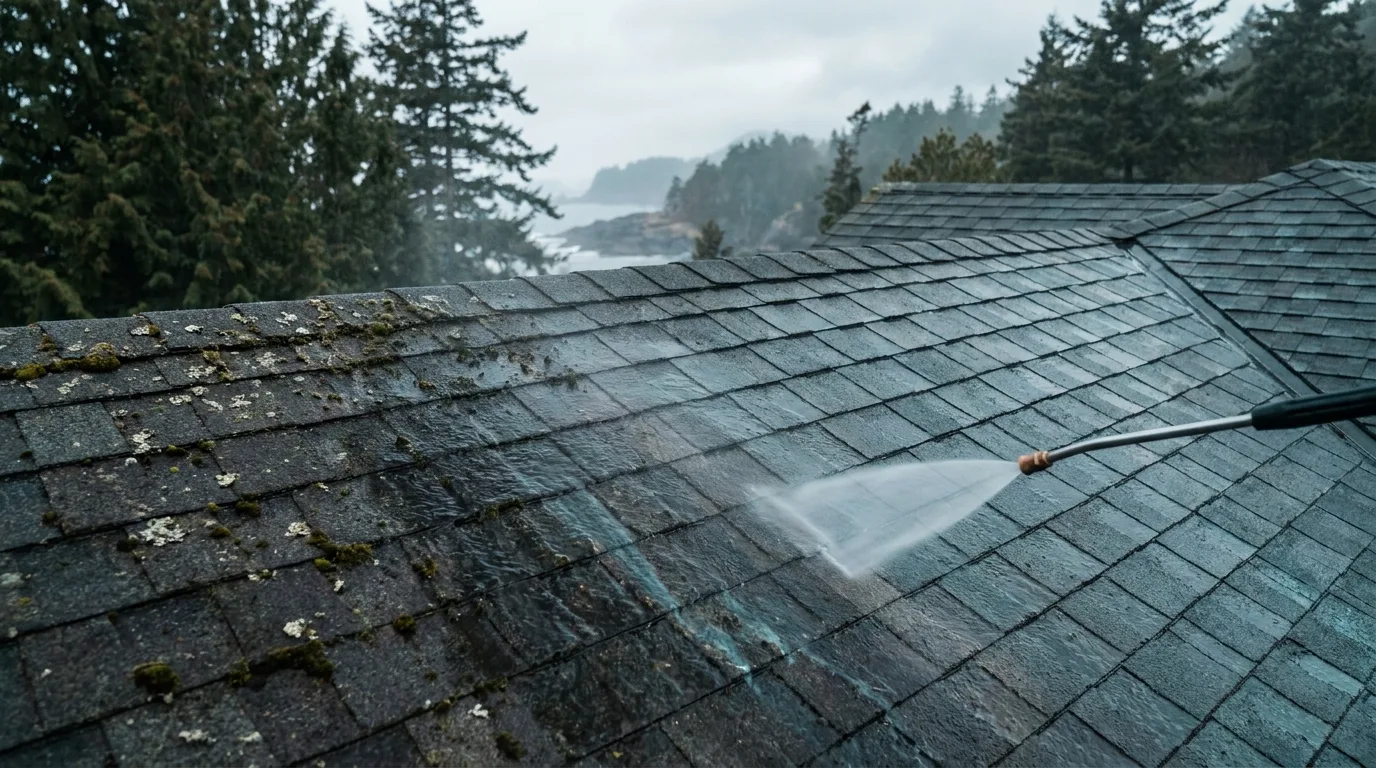
A full low-pressure soft wash of your roof surface, clearing black algae streaking, lichen and years of general soiling without ever putting high pressure on the roofing.
Learn more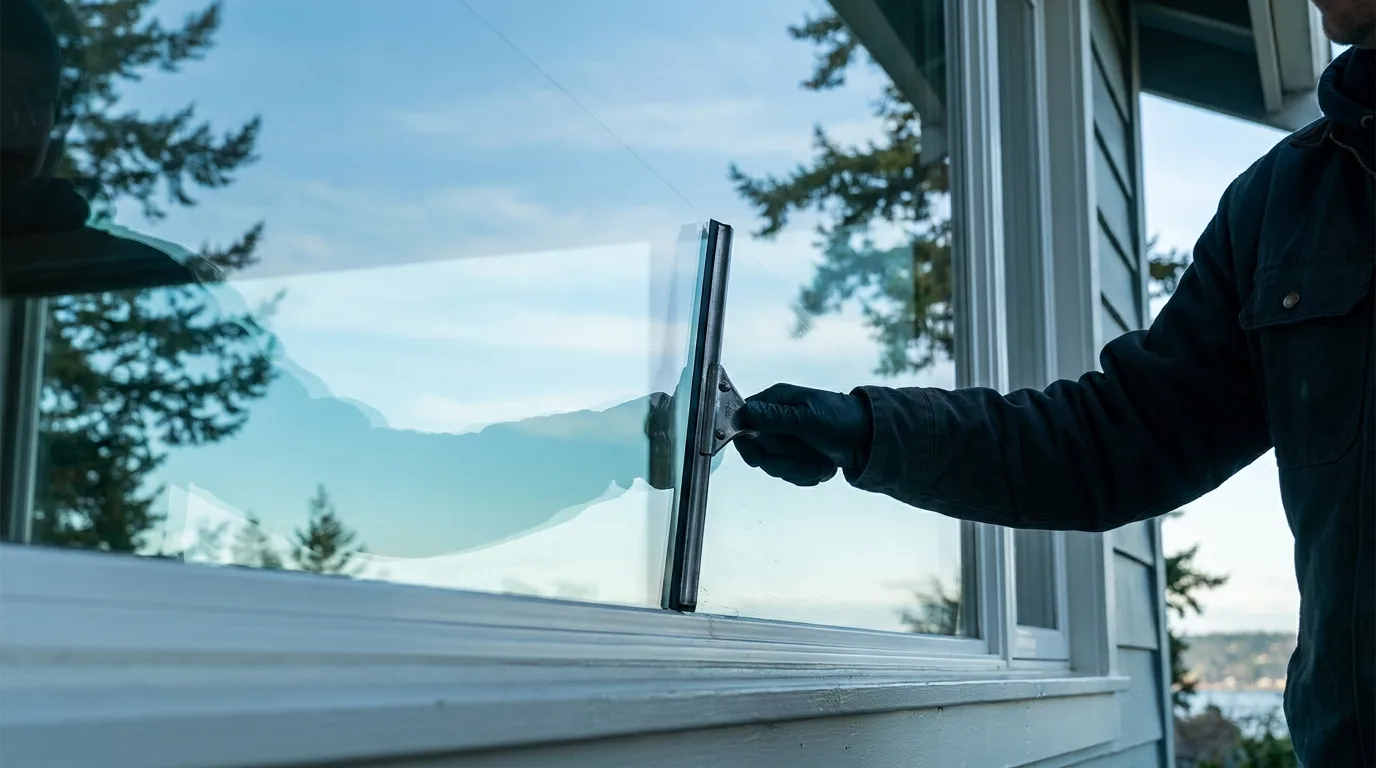
Window Cleaning
Exterior and interior window cleaning including screens, tracks and sills, with hard water spotting and coastal salt film treated rather than smeared around.
Learn more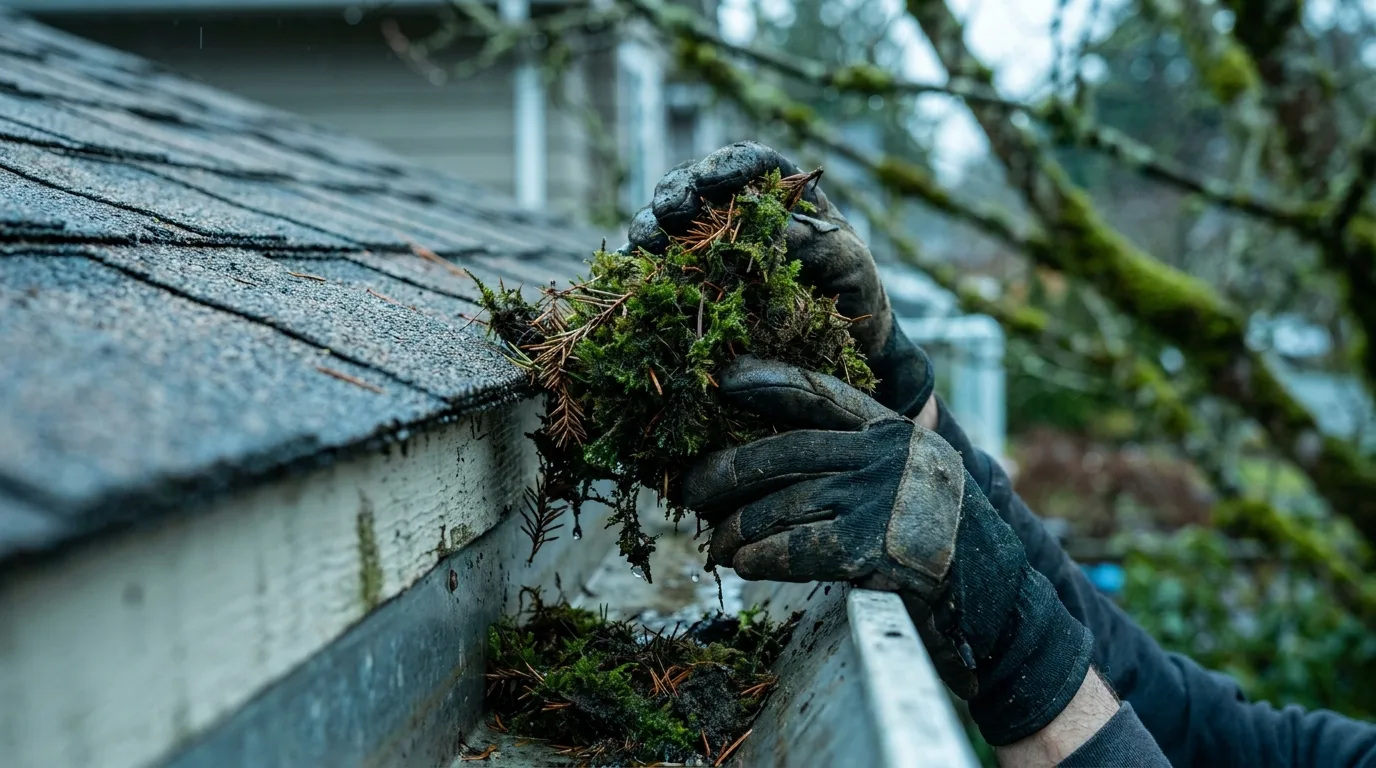
Gutter Cleaning
Hand clearing of gutter troughs, flushing of every downspout and outlet, and a flow check before we leave, so rainwater goes where it was designed to go.
Learn moreGet Your Free Quote
A quick description of the job is all we need to get you a price.