
Soft Wash Roof Cleaning in Nanaimo
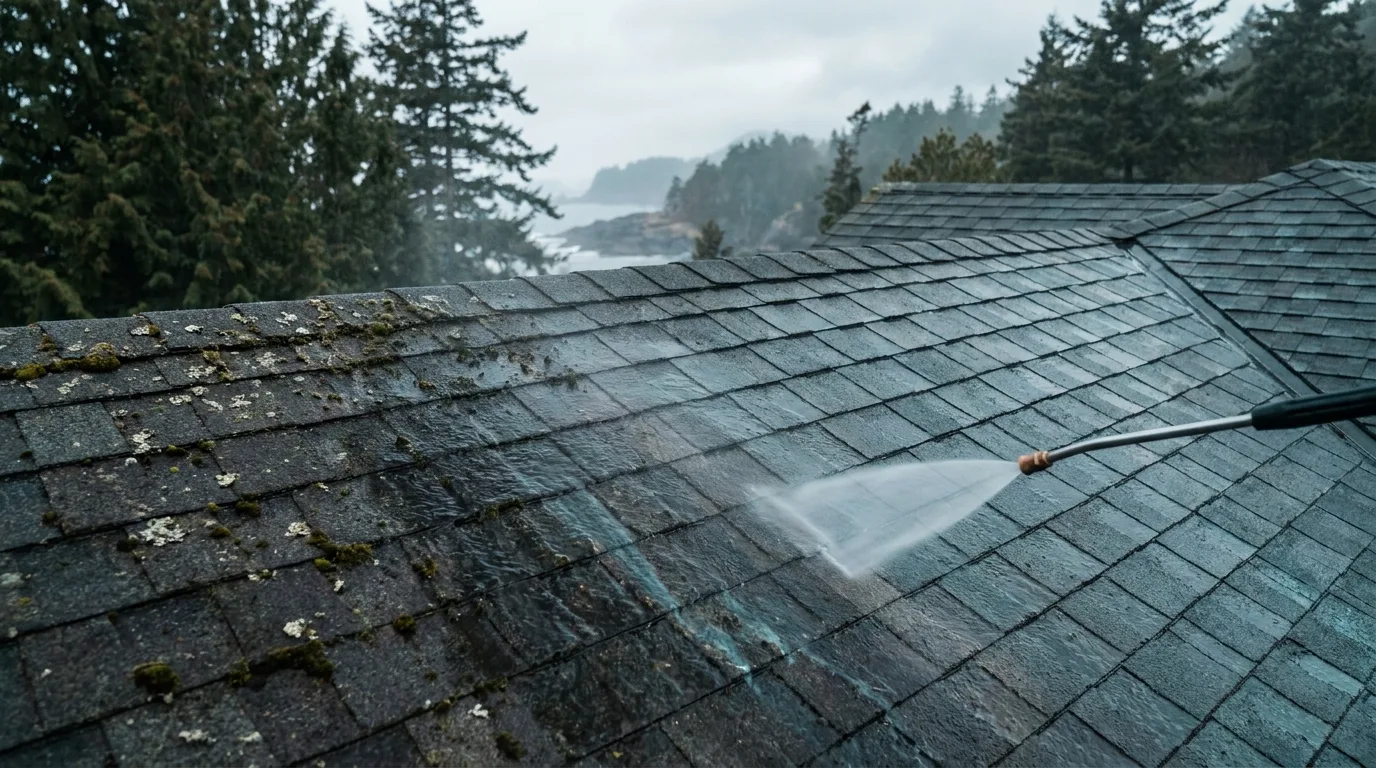
Those dark streaks running down your roof are algae colonies, not dirt. We clean the entire surface at low pressure — the method roofing manufacturers actually approve of.
Those dark streaks are alive. The black staining that runs down the slope of so many Island roofs is not soot, dirt or shadow. It is gloeocapsa, a hardy blue-green algae that feeds partly on the limestone filler in asphalt shingles and spreads as a thin colony across the surface. It streaks downward because rain washes spores down the slope, seeding new growth as it goes.
Alongside it you get lichen — the crusty, pale, flat patches that bond hard to the shingle surface — and a general grey soiling from years of airborne dust, pollen, fir needles and rain. Together they make a sound roof look old, and they make a whole house look neglected from the street.
Soft washing, and why it is the only sensible method
High pressure and roofing do not mix. An asphalt shingle is a mat coated in asphalt and covered with mineral granules. Those granules are the entire UV defence of the roof — they are why a shingle lasts decades instead of years. Point a pressure washer at them and they come off, and you can see them collecting in the gutter afterwards. The roof looks clean and its remaining lifespan has been shortened. Roofing manufacturers are unambiguous about this, and blasting a roof can void the material warranty outright.
Soft washing works the other way around. We apply a cleaning solution across the roof at very low pressure, give it time to break down the organic growth, and then rinse gently. The chemistry does the removing. The water only carries it away. Nothing is scoured, nothing is scrubbed, and the granules stay where the manufacturer put them.
It also reaches what pressure cannot. Solution flows into seams, under shingle edges and into the porous surface of the material, dealing with growth that a jet of water would simply skate over.
Different roofing, different handling
Asphalt shingle is the most common roof we clean here, and the most vulnerable to bad technique. Metal roofing — standing seam, corrugated, metal tile — cleans up very well and mostly needs the correct solution rather than any force, with care taken around fasteners and finishes. Cedar shake is the most delicate: the goal is to lift growth off without raising the grain or driving water into the shakes. Concrete and clay tile are more robust underfoot but crack under weight, so we work from ladders and walk boards as much as possible.
We identify the material and its condition at the quote stage, and that decides everything about the approach.
What comes with the job
The roof surface across all slopes, valleys and ridge lines. Skylights get rinsed clean rather than worked around. Solar panels, vents, flashing and chimneys are cleaned carefully or protected, depending on what they are. Landscaping below the working area is pre-wetted and rinsed afterwards, and the gutters get flushed of anything that ends up in them during the rinse.
And an honest report. From up there we see things you cannot see from the ground: lifted flashing, damaged shingle courses, a failing vent boot, granule loss that is already advanced. We are not roofers and we do not quote roofing repairs, but we will tell you what we saw so you can get it looked at.
Why people book it
The most common reason is that the house is going on the market and the roof is the first thing in the aerial photo. A streaked roof reads as a worn-out roof to a buyer, whether or not the roofing has any life left in it, and cleaning it is dramatically cheaper than the discount a bad-looking roof invites.
The rest is upkeep. Organic growth on a roof holds moisture, and moisture is what ages roofing materials. Clearing the surface every few years keeps the roof drying properly between rains, which is exactly how it was designed to work.
Roof cleaning or moss removal?
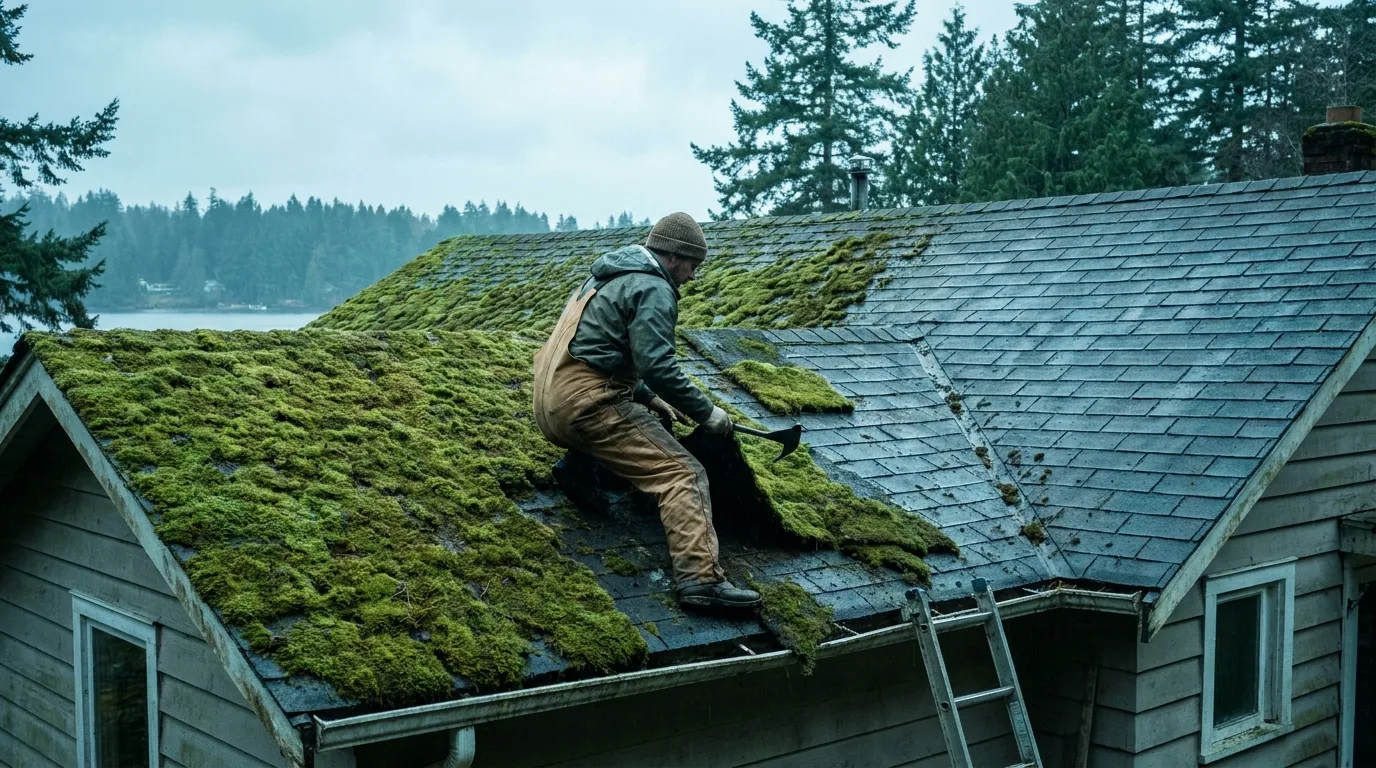
They are different jobs and it is worth being clear about which you need. If the problem is dark streaking, crusty lichen patches or overall grey discolouration, roof cleaning is the service. If you have thick green cushions of moss sitting in the valleys and along the shingle edges, that needs physical removal first — see our roof moss removal page, and we will often do both in one visit.
We clean roofs across Nanaimo, Lantzville, Nanoose Bay, Cedar, Parksville, Qualicum Beach, Ladysmith, Chemainus, Errington and Coombs, Monday to Friday, 9:00 AM to 5:00 PM. Quotes are free.
The whole service is built around the method: cleaning solution and dwell time do the work, water at low pressure only rinses, and your roofing material is never blasted, scoured or scrubbed.
What You Get From Roof Cleaning
Low-pressure soft wash — the method roofing manufacturers approve
Black algae streaking and gloeocapsa staining removed from the whole slope
Lichen and general grey soiling cleared, not just spot-treated
Zero high-pressure contact, so shingle granules stay on the roof
Correct handling for asphalt, metal, cedar shake, concrete and clay tile
Skylights, vents, flashing and chimney surrounds cleaned or protected
An honest report on anything we spot up there that needs a roofer
A visibly newer-looking roof before listing or photographing the house
Soft wash only — the granule layer stays where it belongs
Black streaking treated at the cause rather than scrubbed
Plantings and downpipe outflow managed before the first drop
A straight answer if the roof is too far gone to be worth cleaning
What Roof Cleaning Covers
A roof clean deals with the black streaking, the algae film and the general weathering that builds on a roof long before moss takes hold. It is a soft wash every time. A pressure washer on an asphalt shingle roof strips the granule layer that protects the asphalt from sunlight, and a roof that has been pressure washed can look excellent and be years shorter for it. The rule holds on cedar shake as well, which is thin and brittle where it has weathered.
How Roof Cleaning Works
Identify the roofing
We confirm the material, its age and condition, and check pitch and access so we know how much can be done from ladders rather than on the surface.
Prepare below
Landscaping, decking and paved areas under the working slope get pre-wetted, and anything sensitive nearby is covered or moved.
Apply the solution
Cleaning solution goes on across the full slope at low pressure, worked into valleys, ridges and shingle seams rather than just the open surface.
Let it dwell, then rinse
The solution is given time to break down the algae and lichen, then a gentle low-pressure rinse carries it off the roof and down the slope.
Flush and inspect
Gutters and downspouts get flushed of runoff, the ground below is rinsed, and we report anything we noticed that a roofer should look at.
The Method, in Short
Assess from the ground and from the edge
Shingle condition, lifted tabs, exposed nail heads and soft or spongy areas get looked at before anyone commits to walking a roof. Some roofs should only be cleaned from a ladder or a pole.
Protect the perimeter
Beds, hedges and lawn below the eaves are wetted down first, and downpipes are managed so the runoff goes where it is meant to rather than into one flowerbed.
Soft wash and let it work
The solution is applied at low pressure and left to break down the algae and lichen. Dwell time replaces force entirely — this is the whole method, not a preliminary step.
Gentle rinse and clear the run-off path
A controlled low-pressure rinse, then gutters and valleys are checked, since whatever came off the roof has gone somewhere.
What It Costs
Priced on roof area, pitch, access and how much staining there is. Single-storey and walkable is a very different job from steep and three storeys up. Quotes are free.
Roof Cleaning by town
Tree cover, exposure and housing age change what this job actually takes. These cover it town by town.
Book Your Roof Cleaning
Tell us about the job and we'll send you a free, no-obligation quote for roof cleaning.
Roof Cleaning Questions
Almost always gloeocapsa, a blue-green algae that colonises asphalt shingles and streaks downward as rain carries spores down the slope. It is organic growth rather than dirt, which is why hosing it does nothing and why a cleaning solution is what actually removes it.
Because the mineral granules on an asphalt shingle are its UV protection and its lifespan, and high pressure takes them off. You get a clean roof and a shorter-lived one, and most manufacturers treat pressure washing as grounds to void the material warranty.
Yes. Metal roofing cleans up very well with the right solution and a low-pressure rinse, and we take care around fasteners, sealants and any coated or painted finish. The method is the same in principle — chemistry first, gentle water second.
As little as possible. We work from ladders wherever the layout allows, and where the surface has to be accessed we do it carefully and only on materials that will take the weight. Concrete and clay tile in particular are handled from the edges as much as we can manage.
Almost always a hardy algae that feeds on the limestone filler in asphalt shingles. It spreads downward with the water flow, which is why the streaks run vertically and why they usually start below a chimney or a section of upper roof. It is not dirt, so rinsing does nothing at all — it has to be treated. Left alone it slowly holds more moisture against the shingle and gives moss somewhere to establish.
You can, and it is one of the more expensive mistakes available. Asphalt shingles are protected by a bonded granule layer, and pressure removes it — often invisibly, so the roof looks better than ever while its remaining life has been cut. Cedar shake is worse again, because pressure raises the grain and splits weathered shakes outright. Every roof we clean is soft washed.
It can, which is why roof access is a judgement call rather than a default. Shingles are more fragile cold, brittle when old, and lethal underfoot with algae on them. Where the roof is steep, brittle or slick, the work is done from ladders and extension equipment instead. If a roof genuinely should not be walked, that gets said rather than worked around.
You Might Also Need
Roof Moss Removal
Careful physical removal of established moss from your roof, followed by a treatment that slows regrowth, so the moss stops working its way under your shingles.
Learn more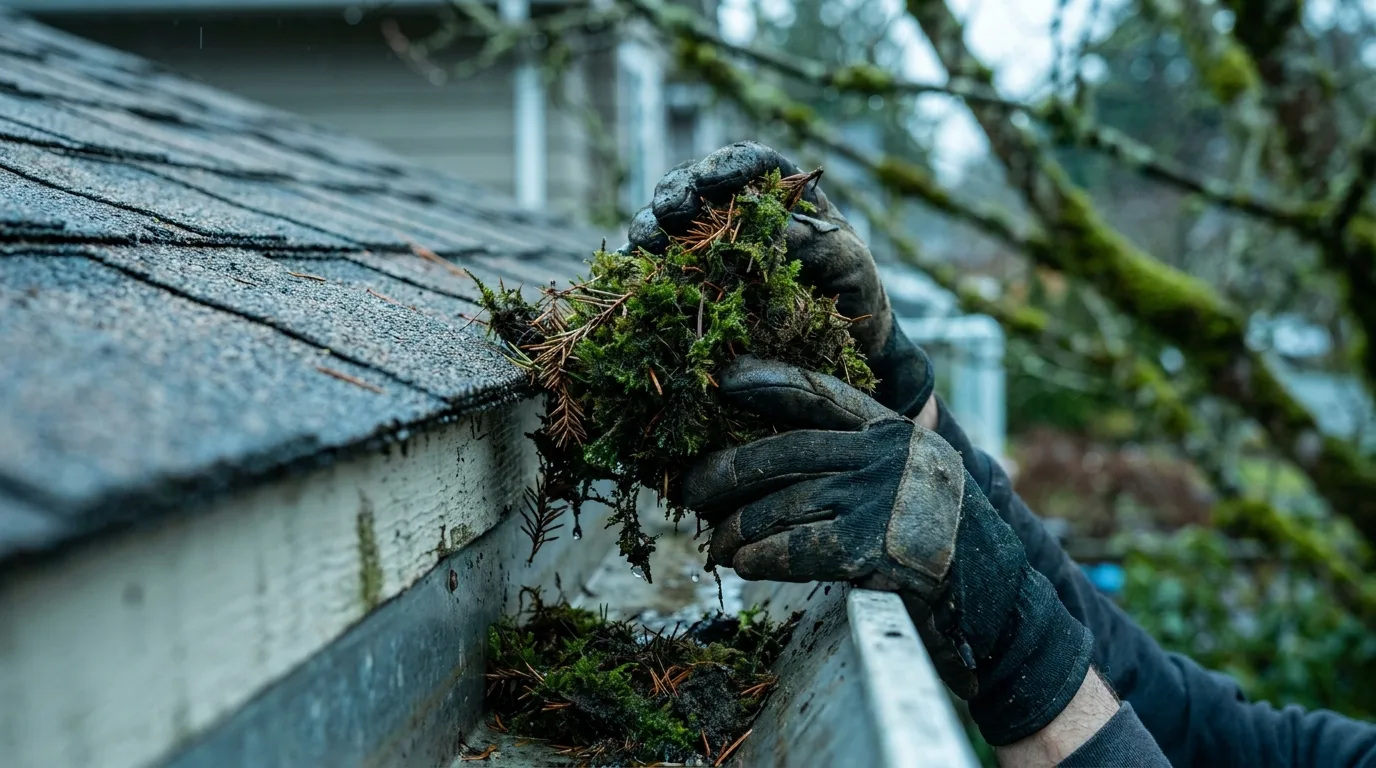
Gutter Cleaning
Hand clearing of gutter troughs, flushing of every downspout and outlet, and a flow check before we leave, so rainwater goes where it was designed to go.
Learn more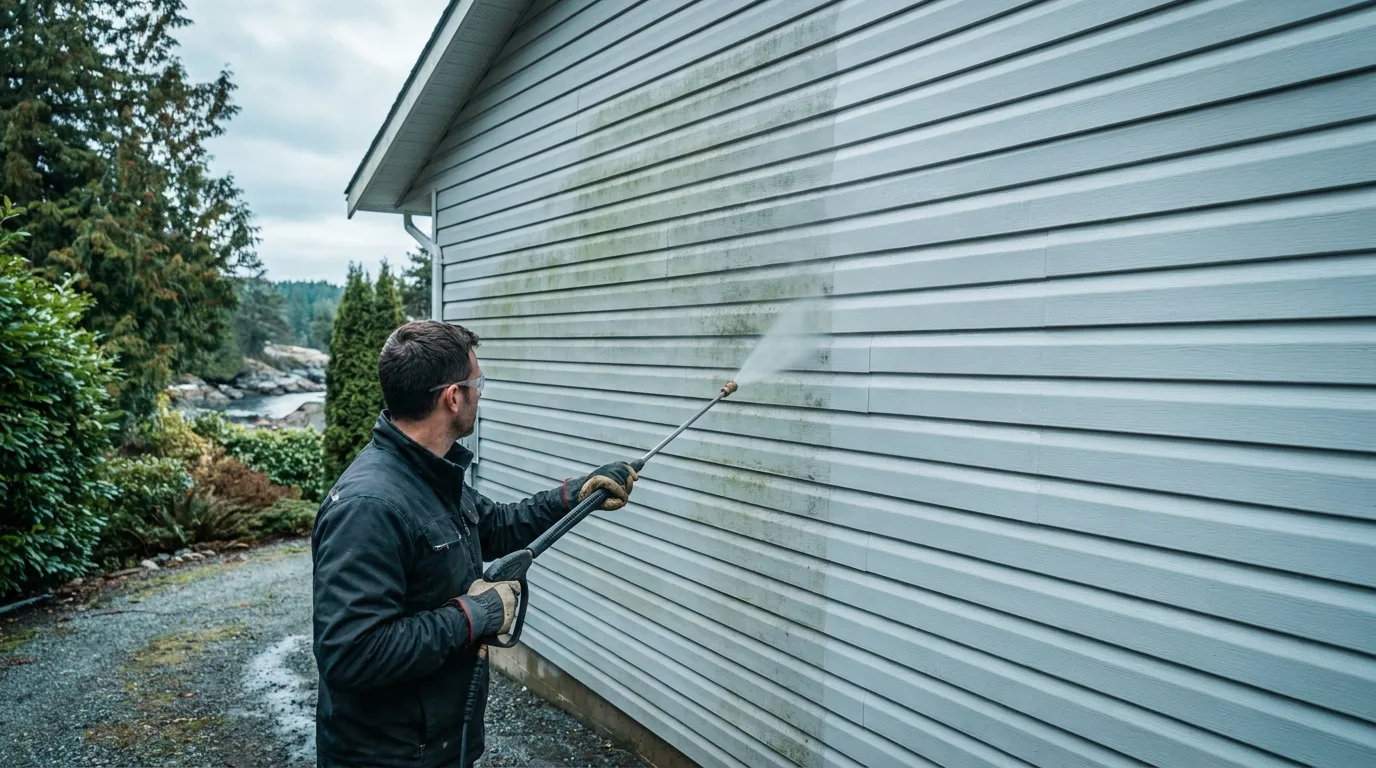
House Washing
A full soft wash of your home's exterior walls, soffits, fascia and trim, lifting algae, mildew, cobwebs and road film without forcing water behind the cladding.
Learn moreAsk Us About Roof Cleaning
Quotes cost nothing and carry no obligation. Call, text, or send the form.