
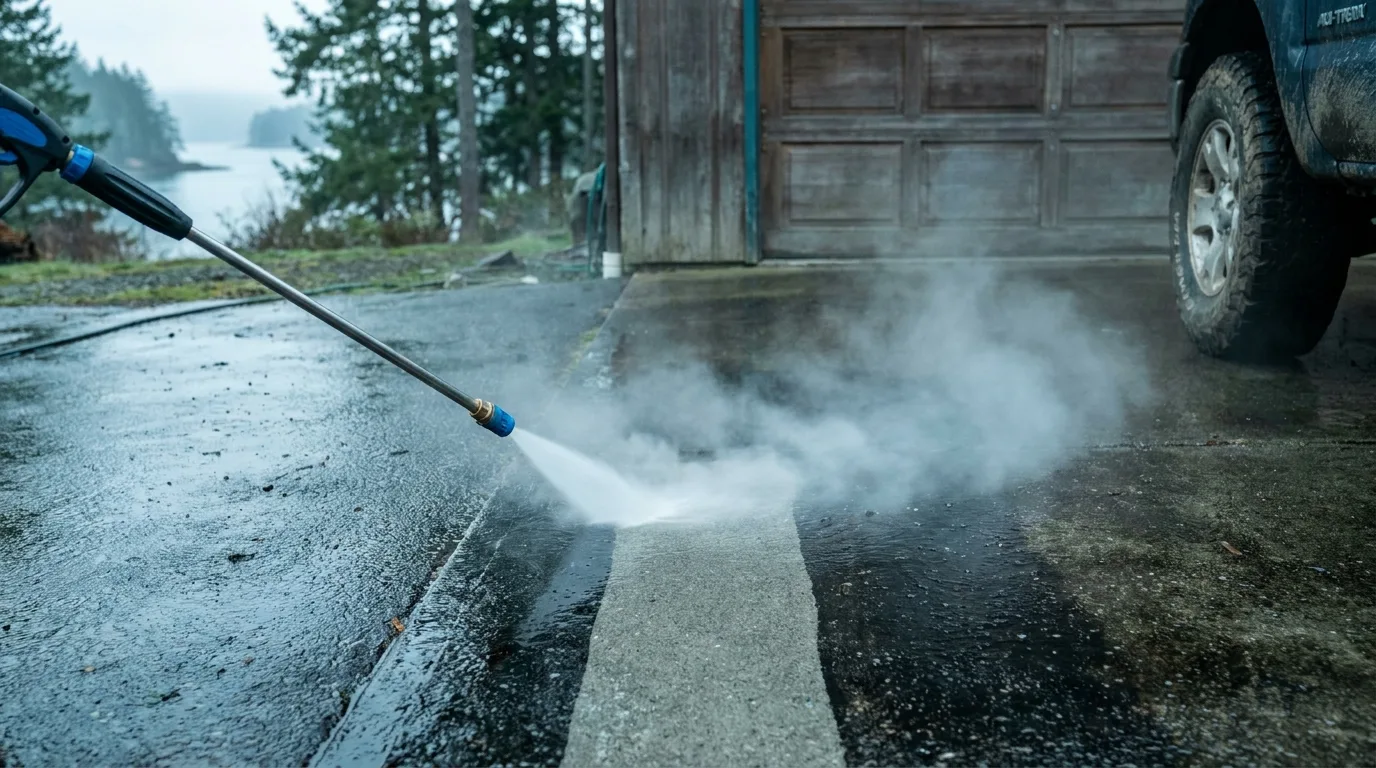
Power Washing, With Heat Behind It
Power washing means heated water, and heat is the difference between shifting a stain and smearing it. Oil, grease, gum, sap and tar need it. Most other things do not.
Power washing and pressure washing get used as the same word, and in the trade they are not. Pressure washing moves unheated water fast. Power washing heats it first. The pump, the hose and the wand can be identical — the difference is a burner, and what that burner changes is not how hard the water hits but what the water can dissolve on contact.
That distinction matters because pressure is a poor tool for a whole category of stain. Algae, moss and general grime sit on and in a surface as loose material, and mechanical force removes them. Oil, grease, gum, pitch and tar are chemically bonded films. You can throw enormous pressure at a motor-oil stain on a garage floor and mostly succeed in driving it deeper into the concrete.
Why heat does what pressure cannot
Heat cuts viscosity. A cold petroleum film is stiff and clings; the same film at temperature thins, releases from the substrate and lifts into the wash water instead of resisting it. Detergents also work far faster warm, because surfactants need molecular movement to get between a stain and the surface holding it.
For anything with oil, fat, wax, sugar or resin in it, that is the whole ballgame. It is why commercial kitchens, fuel bays and workshop floors are cleaned hot everywhere, and why the same stains on a residential driveway respond to heat and shrug off cold water.
What this service is for
Motor oil, transmission fluid and hydraulic staining on garage floors, carport slabs, parking pads and the apron where a vehicle sits. Grease and cooking residue around outdoor kitchens, barbecue areas and the concrete beneath them. Chewing gum, which is a rubber-and-wax compound that cold water polishes rather than removes. Tree pitch and sap — a genuine mid-Island problem, since fir and pine drop resin onto whatever is parked or built beneath them, and resin is a solvent problem, not a pressure problem. Tar and asphalt splatter tracked off a resealed driveway or road work. Garbage and organics bin pads, where the residue is fat and protein rather than dirt, and where the smell persists precisely because a cold rinse never actually removed the source. Workshop, shed and equipment slabs carrying a mixed film of oil, dust and rubber.
What it is deliberately not for
Heat is a tool with a narrow brief, and using it everywhere is how surfaces get wrecked. It does not go on vinyl or painted siding, which can warp or blister — that is soft washing, at low pressure and low temperature. It does not go on asphalt shingles, where heat accelerates granule loss and shortens the roof's life. It goes on wood decks and fences rarely and gently, because heat raises grain and can pull resin out of cedar.
If your problem is green film, algae streaking or general weathering — which is most problems on this coast — the right answer is one of our other services, at the correct pressure and temperature for the material. We will tell you that rather than sell you heat you do not need.
How a hot job runs differently
Hot water changes the sequence. Surfaces get a controlled warm-up rather than an immediate blast, because thermal shock cracks cold concrete and glass. Dwell time matters more than pressure, so degreaser goes down and is given the minutes it needs while the surface is warm and receptive. Runoff carries dissolved petroleum rather than plain dirt, so it is contained and directed rather than simply chased toward the nearest drain, and plantings and drains adjacent to the work are protected before anything starts.
What to expect from the result
Fresh oil comes up close to completely. Old oil that has been sitting in bare concrete for years has migrated deep into the pore structure, and heat plus degreaser will lift the bulk of it and leave a ghost — a lighter shadow where the stain was. That is not a failed clean; it is the limit of what is recoverable without resurfacing, and anyone promising a garage floor back to original grey has not seen a ten-year-old stain. We will tell you which of yours is which before we start, not after.
Sealed and coated floors behave better than bare ones, and a slab that gets cleaned before it is sealed will stay clean far longer than one that never does.
We power wash across Nanaimo, Lantzville, Nanoose Bay, Cedar, Parksville, Qualicum Beach, Ladysmith, Chemainus, Errington and Coombs, Monday to Friday, 9:00 AM to 5:00 PM. Quotes are free.
This is the heated-water service, kept for the petroleum, sugar and resin stains that cold water simply cannot dissolve — which is a different problem from the algae and grime the rest of our cleaning handles.
What You Get From Power Washing
Heated water for the petroleum, sugar and resin stains cold water cannot dissolve
Motor oil, transmission fluid and hydraulic staining lifted rather than driven deeper
Tree pitch and sap treated as the solvent problem they actually are
Chewing gum, tar and asphalt splatter removed without polishing them into the surface
Bin pads degreased at the source, so the smell goes with the residue
Controlled warm-up instead of thermal shock on cold concrete and glass
Runoff carrying dissolved petroleum contained and directed, not chased to the drain
An honest read on which stains will fully clear and which will leave a ghost
Heat for the bonded films cold water genuinely cannot dissolve
Gradual warm-up instead of thermal shock on cold concrete
Degreaser given the dwell time that is most often skipped
Told plainly when heat is not what your problem needs
What Power Washing Covers
Power washing means heated water, and in the trade that is the whole distinction — pressure washing moves unheated water fast, power washing heats it first. Heat is not a stronger version of pressure. It is a different tool, and it earns its place on one category of problem: oil, grease, gum, tree pitch, tar and anything else that is chemically bonded rather than simply sitting on a surface. For algae and general grime it is spending money for nothing.
How Power Washing Works
Identify the stain, not just the mess
Petroleum, sugar, resin and organic staining each behave differently under heat. We work out which you have, how long it has been there, and whether the surface is bare, sealed or coated.
Confirm heat is the right call
If the surface would be damaged by heat, or the stain is simply algae and grime, we say so and quote the appropriate service instead. Heat is not a default.
Protect and contain
Plantings are pre-wetted, drains and adjacent surfaces are protected, and containment is set up so runoff carrying dissolved oil is directed rather than left to find its own way.
Degrease with dwell time
The surface is brought up to temperature gradually, degreaser is applied and given the minutes it needs to break the bond while the substrate is warm — the step most often skipped.
Hot rinse and assess together
Even overlapping passes at a consistent stand-off, edges and joints detailed by hand, then we walk it with you and point out anything that has ghosted rather than cleared.
The Method, in Short
Identify the stain rather than the mess
Petroleum, sugar, resin and organic staining all behave differently under heat. How old it is and whether the surface is bare, sealed or coated decides what is achievable.
Confirm heat is the right call
If the surface would be damaged by heat, or the problem is really just algae, that gets said and the appropriate service quoted instead. Heat is never the default.
Bring the surface up gradually
Cold concrete and glass crack under thermal shock, so the temperature comes up in stages rather than starting at full heat. Degreaser goes on and is given real dwell while the substrate is warm.
Hot rinse and contain the runoff
Even overlapping passes, edges detailed by hand, and runoff carrying dissolved petroleum directed and contained rather than chased toward the nearest drain.
What It Costs
Priced on the area, the type of staining and how long it has been there — age matters more than size on a petroleum stain. Quotes are free.
Power Washing by town
Tree cover, exposure and housing age change what this job actually takes. These cover it town by town.
Book Your Power Washing
Tell us about the job and we'll send you a free, no-obligation quote for power washing.
Power Washing Questions
Temperature. Power washing uses heated water; pressure washing uses unheated water at high pressure. Most people use the terms interchangeably and most residential work is genuinely pressure washing — heat only earns its place on oil, grease, gum, sap, tar and similar bonded films, which is exactly what this service is for.
Usually not completely, and we would rather say so upfront. Fresh oil comes up close to fully. Oil that has been soaking into bare concrete for years has migrated into the pore structure, so heat and degreaser lift the bulk and leave a lighter ghost where it was. Removing that last shadow is a resurfacing job, not a cleaning one.
Heat can, if it is applied badly. Hitting cold concrete with very hot water causes thermal shock and can craze the surface, which is why we bring a surface up to temperature gradually rather than starting at full heat. It is also why we do not use heat on siding, shingles or, as a rule, wood.
If the problem is green, grey or streaky — algae, moss, general weathering — cold water and the right cleaning solution will handle it, and that is what our house, driveway and concrete services do. If the problem is dark, greasy, sticky or sap-like, that is when heat is worth paying for. Send us a photo and we will tell you which one you have.
Temperature, and nothing else. Power washing uses heated water; pressure washing uses unheated water at high pressure. Most residential work is genuinely pressure washing, and most of the time that is correct. Heat only earns its cost on oil, grease, gum, sap, tar and similar bonded films, because those need to be dissolved rather than dislodged.
Usually not completely, and that is worth saying before the work rather than after. Fresh oil comes up close to fully. Oil that has been soaking into bare concrete for years has migrated into the pore structure, so heat and degreaser lift the bulk and leave a lighter ghost where it was. Removing that last shadow is resurfacing, not cleaning.
Yes, which is why it is used selectively. Hitting cold concrete with very hot water causes thermal shock and can craze the surface. Heat does not go on vinyl or painted siding, which can warp or blister, and it does not go on asphalt shingle, where it accelerates granule loss. On wood it is used rarely and gently, because heat raises grain and draws resin out of cedar.
You Might Also Need
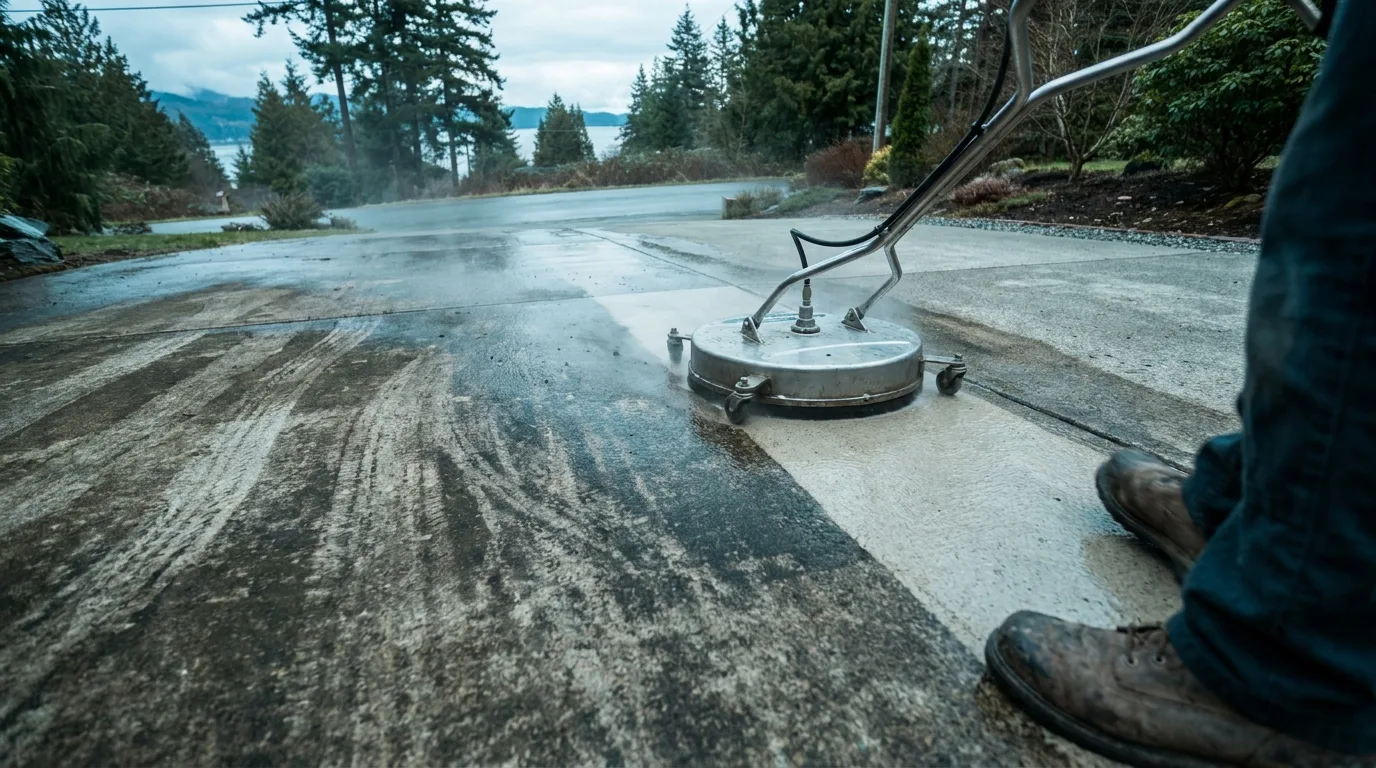
Driveway Cleaning
Deep cleaning of driveways and parking aprons, targeting vehicle staining — oil and fluid drips, tire scuffs, rust marks and the algae strip down the centre.
Learn more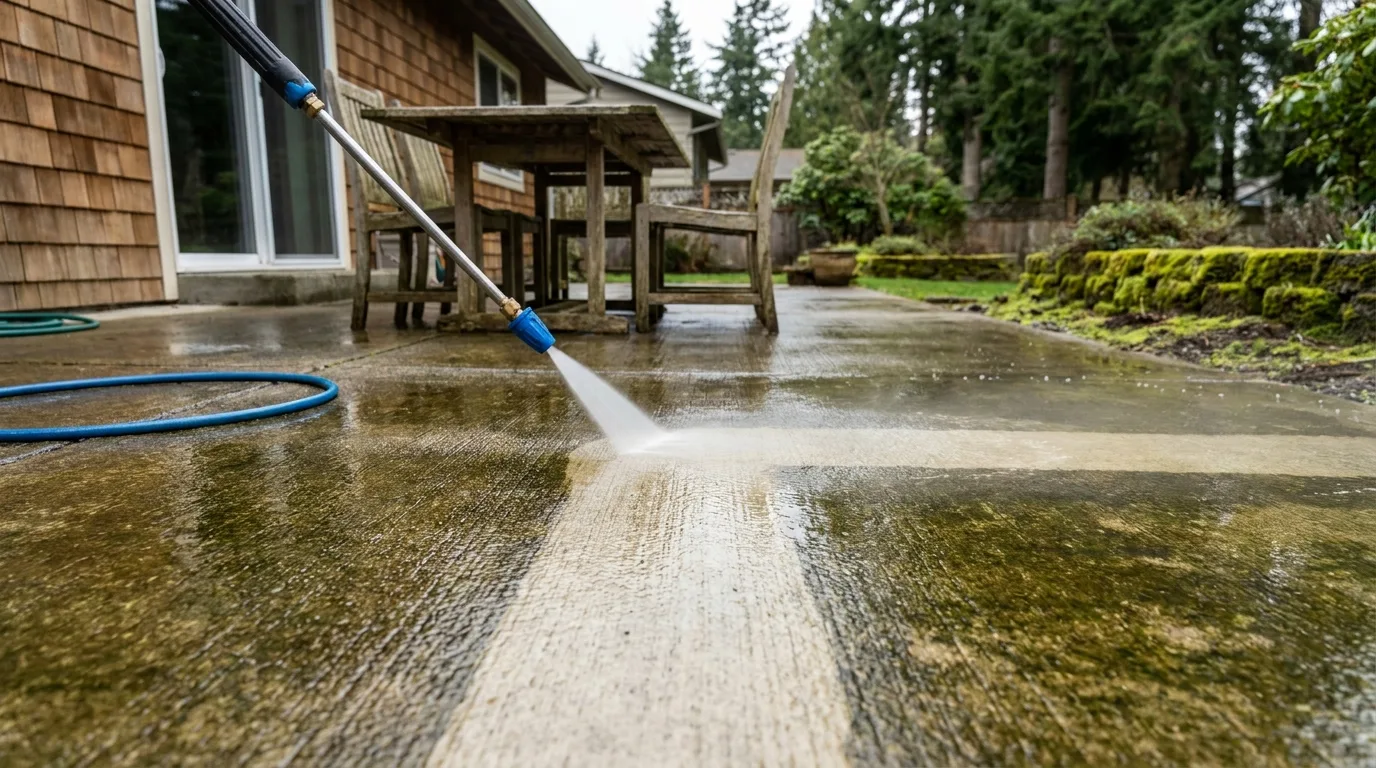
Concrete Cleaning
Cleaning for concrete anywhere on your property — patios, pool surrounds, garage floors, stairs, retaining walls, exposed aggregate and stamped finishes.
Learn more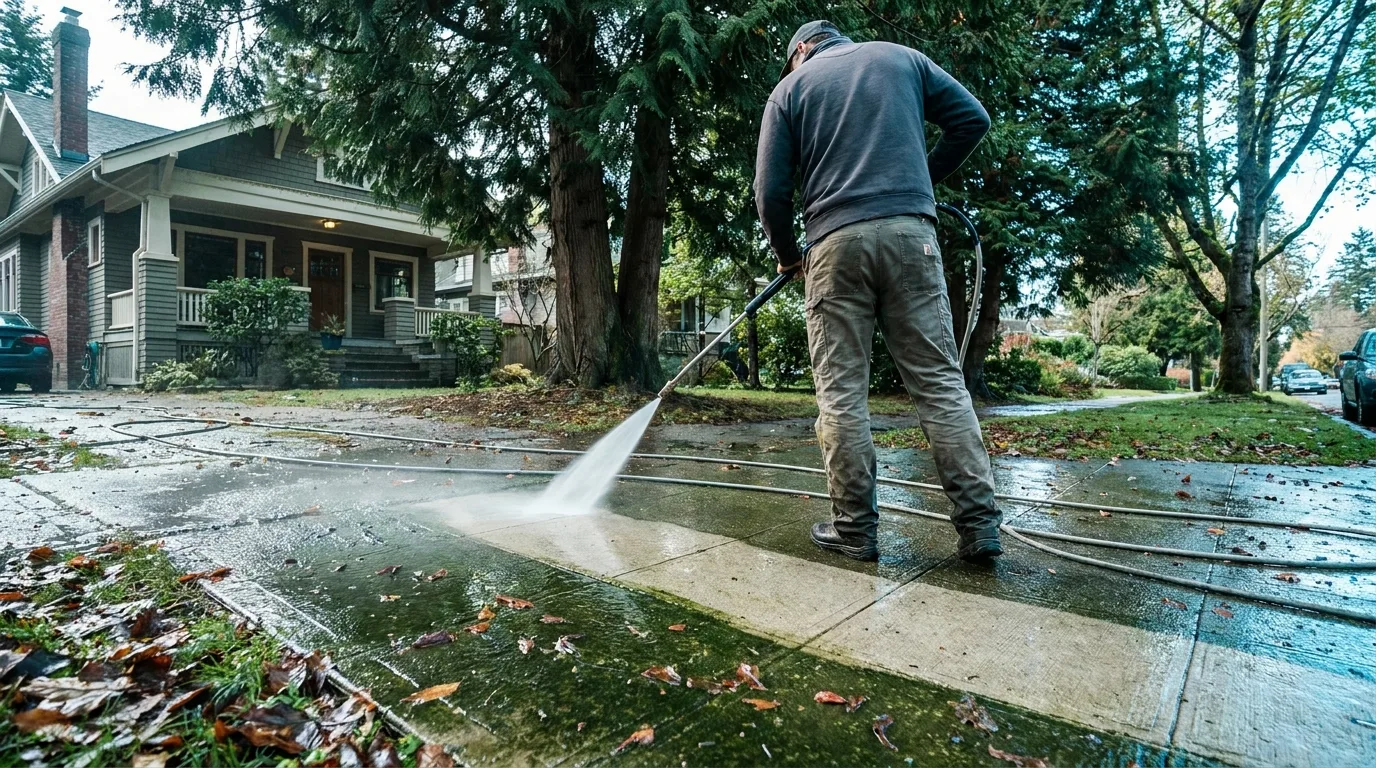
Sidewalk Cleaning
Cleaning for footpaths, walkways, entryways, strata common areas and small commercial frontages, focused on removing the slippery algae film that builds up over winter.
Learn moreNot Sure What You Need?
Tell us what the marks look like and we'll say whether power washing is the right call — the quote is free either way.